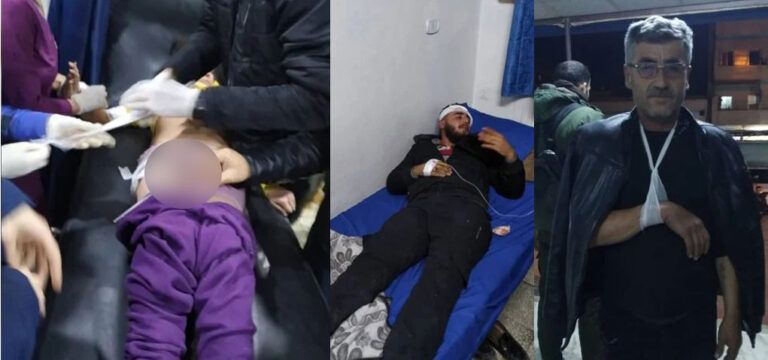
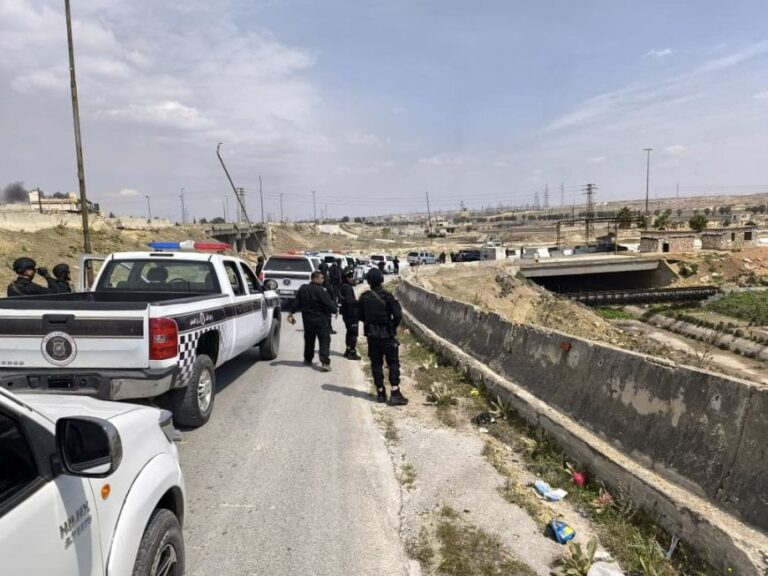
The predominantly Kurdish city of Kobani (Ayn al-Arab), in northern Syria, has been subjected for weeks to a suffocating siege imposed by armed factions affiliated with the so-called “Syrian Interim Government,” represented by Hayat Tahrir al-Sham. This siege has been accompanied by a systematic campaign of looting and pillage targeting dozens of Kurdish villages in the city’s countryside, following the forced displacement of their inhabitants as a result of military operations.
Residents of Kobani are suffering under a tight blockade that has prevented the entry of food, medical supplies, and basic necessities, leading to a severe deterioration in living and health conditions. A near-total shortage of medicines has been recorded, particularly for chronic illnesses, alongside the depletion of infant formula and a sharp decline in the availability of vegetables and foodstuffs in local markets.
The complete blackout of electricity has disrupted vital departments within hospitals and, combined with fuel shortages, has exacerbated civilian suffering. More than 500,000 people living in the city and its surrounding countryside are now deprived of heating, lighting, and water pumping, amid harsh climatic conditions.
The Kobani Energy Authority announced that the electricity outage has caused serious damage across all aspects of daily life and called on the Syrian Interim Government to take immediate steps to repair the faults and restore power to the city, without any meaningful response.
On 4 February 2026, the Kobani Water Authority revealed, in an official statement, that 14 drinking water stations had gone out of service due to the electricity outage, confirming that the city and its rural areas have been without water for approximately 20 days, posing a direct threat to residents’ lives. The statement further noted the failure of Interim Government institutions to honor their previous commitments to secure electricity supplies.
In parallel with the siege, local sources and Kurdish media platforms documented large-scale looting and pillage carried out by factions affiliated with the Syrian Interim Government in the Kurdish villages surrounding Kobani, after residents were forcibly displaced out of fear of retaliatory actions by armed factions aligned with Damascus.
The looting operations included the theft of agricultural crops (wheat, barley, corn); the seizure of tractors, agricultural machinery, livestock, and poultry; the complete emptying of commercial shops; the looting of household furniture and electrical appliances; the theft of solar energy systems and their components; the removal of public electricity transformers; the stripping of copper wiring and electricity and internet cables; and the theft of fuel and private vehicles.
These practices have deprived the population of the most basic means of survival and have entirely destroyed livelihoods and production capacities.
Local testimonies confirm that the stolen property was transported by trucks to nearby cities and areas such as Raqqa, Ain Issa, and Tal Abyad, reinforcing the organized and systematic nature of these violations. This places the Syrian Interim Government and its forces deployed in the area under direct legal responsibility, particularly given their role in securing, facilitating, and participating in the looting, in coordination with armed elements from certain Arab tribes acting in practice as auxiliary forces.
Kurdish media platforms documented, over a short period, that the following villages and towns were subjected to total or near-total looting:
Breach of Agreements and Continuation of the Siege
The siege on Kobani was supposed to be lifted pursuant to the agreement signed between the Syrian Democratic Forces and the Syrian Interim Government on 29 January 2026, announced on 30 January, with implementation scheduled to begin on 2 February 2026. However, as of the date of this report, the siege remains in place, constituting a clear breach of the agreement’s provisions.
The blockade has placed the lives of patients—particularly cancer patients—at extreme risk, due to their inability to leave the city to continue treatment sessions and the obstruction of essential medicines and medical supplies. This constitutes a direct threat to the fundamental rights to life and health.
These violations occur within a broader context of grave crimes committed against Kurdish civilians as part of the military operation carried out by the forces of the Syrian Interim Authority, represented by Hayat Tahrir al-Sham, against predominantly Kurdish areas. The operation began on 6 January 2026 with attacks on the Sheikh Maqsoud and Ashrafieh neighborhoods of Aleppo, which were seized on 10 January 2026.
Subsequently, the operations expanded to areas east of the Euphrates, following alliances between certain Arab tribes and Interim Government forces, particularly in Raqqa and the northern countryside of Deir ez-Zor. Violations escalated as operations reached other Kurdish regions, including Kobani, al-Hasakah, and the countryside of Qamishli.
Despite the announcement by the Syrian Democratic Forces on 30 January 2026 of a ceasefire agreement, field realities confirm the continued siege, alongside documented cases of arbitrary arrest and torture of civilians.
What is occurring in the city of Kobani and its countryside constitutes a consistent and integrated pattern of serious violations of international humanitarian law and international human rights law. It urgently requires action by competent international bodies to halt these violations, ensure the protection of civilians and their property, immediately lift the siege, guarantee the safe and dignified return of the displaced, and hold all those responsible accountable, without exception.