Within an accelerated context of administrative decisions of a social and religious character, authorities affiliated with the Syrian Interim Authority led by Hay’at Tahrir al-Sham issued, during January and February 2026, three separate decisions that directly affect individual rights and freedoms—particularly freedom of personal appearance, freedom of social conduct, and cultural and personal rights related to lifestyle choices.
These decisions concern: the prohibition of gender mixing and dancing in tourist areas; a ban on female employees wearing makeup; and the imposition of high fees on alcoholic beverages. Together, they raise serious human rights concerns about the entrenchment of ideological restrictions on society outside any participatory or constitutional legal framework.
First: The Ban on Gender Mixing and Dancing in Wadi Barada – A Restriction on Social and Cultural Conduct
On 3 February 2026, the Municipality of Souq Wadi Barada in the Damascus countryside issued a circular prohibiting restaurants in the area from receiving tourist groups that engage in celebrations or mixed dancing between women and men, on the grounds that such activities allegedly violate what the decision described as “customs and traditions.”
The circular stated:
“Based on the morals of our true religion, the public decency regulations, and in order to safeguard and respect societal customs and traditions, it is strictly prohibited to receive mixed tourist groups that hold mixed dancing parties and mingle without an ethical deterrent in popular restaurants and others. Any violation shall result in the closure of the restaurant and sealing it with red wax.”
The decision was signed in the name of the Head of Souq Wadi Barada Municipality, Ahmad San Ali.
The imposition of restrictions based on religious or customary interpretations not enshrined in written law, coupled with threats to close private establishments, constitutes a breach of the principle of legality.
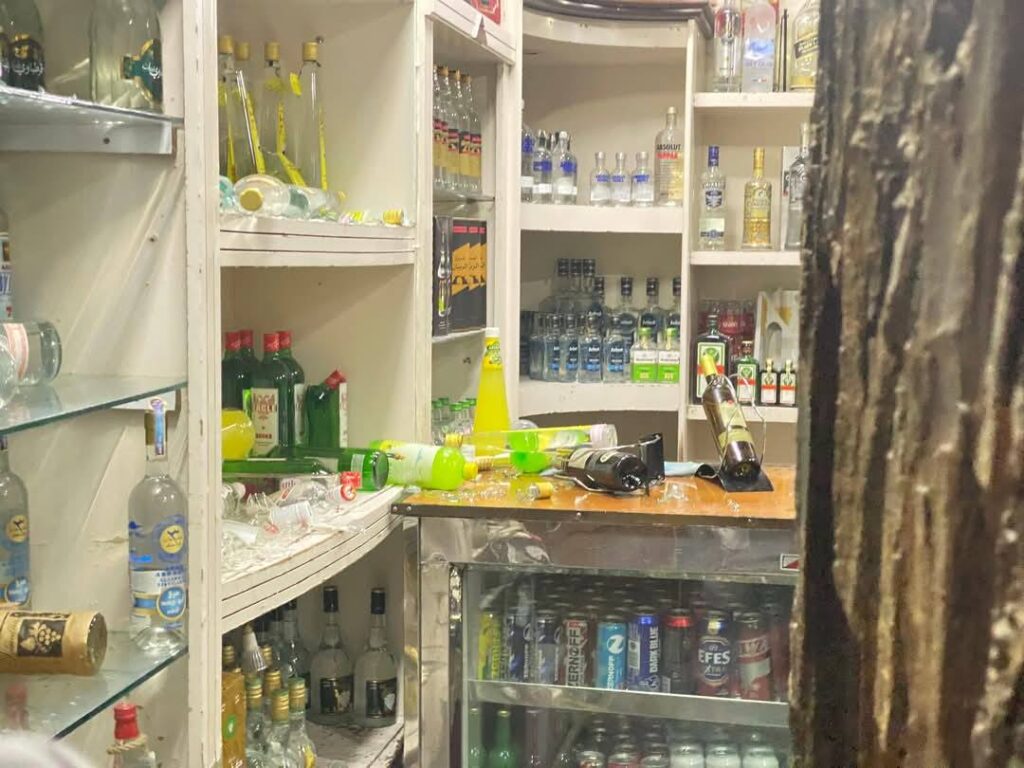
Second: The Imposition of Excessive Fees on Alcoholic Beverages – An Indirect Ban
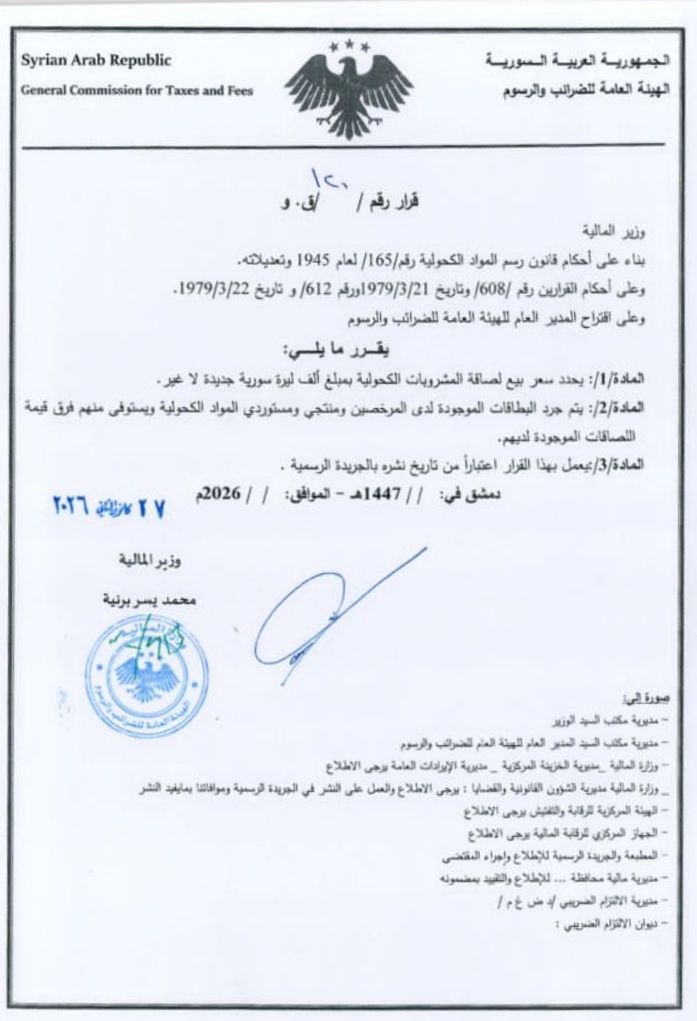
On 27 January 2026, the Ministry of Finance of the Interim Authority issued Decision No. 120, which stipulates in its first article the fixing of the price of an alcohol tax stamp at 1,000 Syrian pounds under the new currency.
According to available information, this amount is equivalent to 100,000 Syrian pounds under the old exchange rate (approximately USD 9) and is imposed on each alcoholic product, without specifying:
the type of alcoholic beverage, the alcohol percentage, or the size of the container.
This means that the decision applies to all alcoholic beverages, including beer, whether locally produced or imported.
Human rights observers consider this decision an attempt to indirectly prohibit the sale and consumption of alcohol through a financial instrument. It also raises concerns of discrimination on the basis of belief and lifestyle.
Third: The Ban on Makeup for Female Employees in Latakia – Gender-Based Discrimination
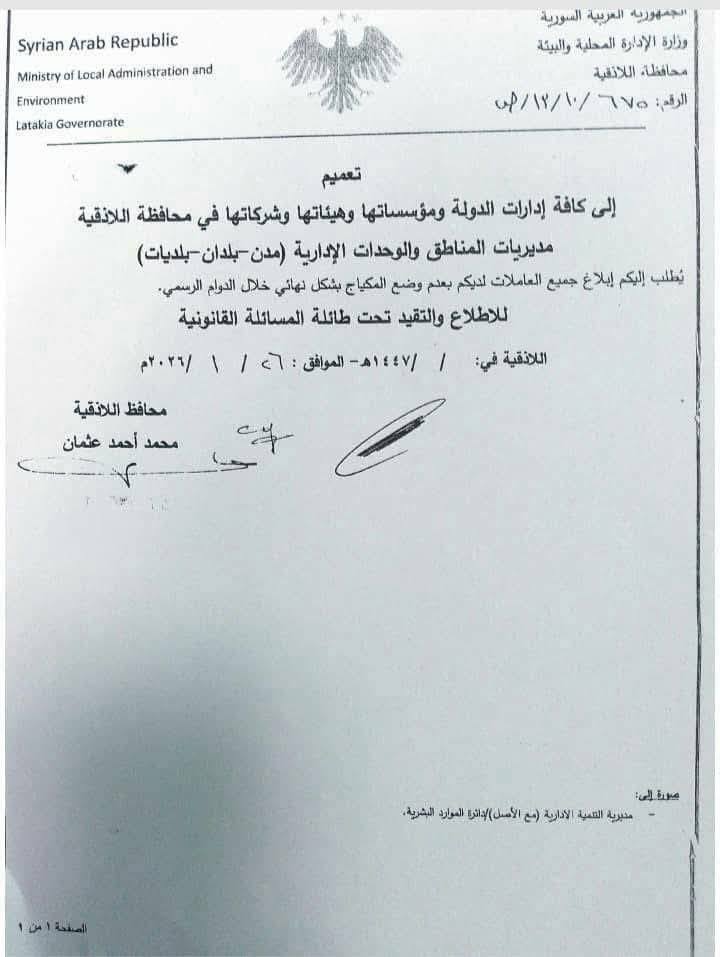
On 26 January 2026, an administrative circular was issued by the Governor of Latakia, Mohammad Ahmad Othman, appointed by the Interim Authority, mandating a complete ban on female employees in public departments and institutions from wearing makeup during official working hours.
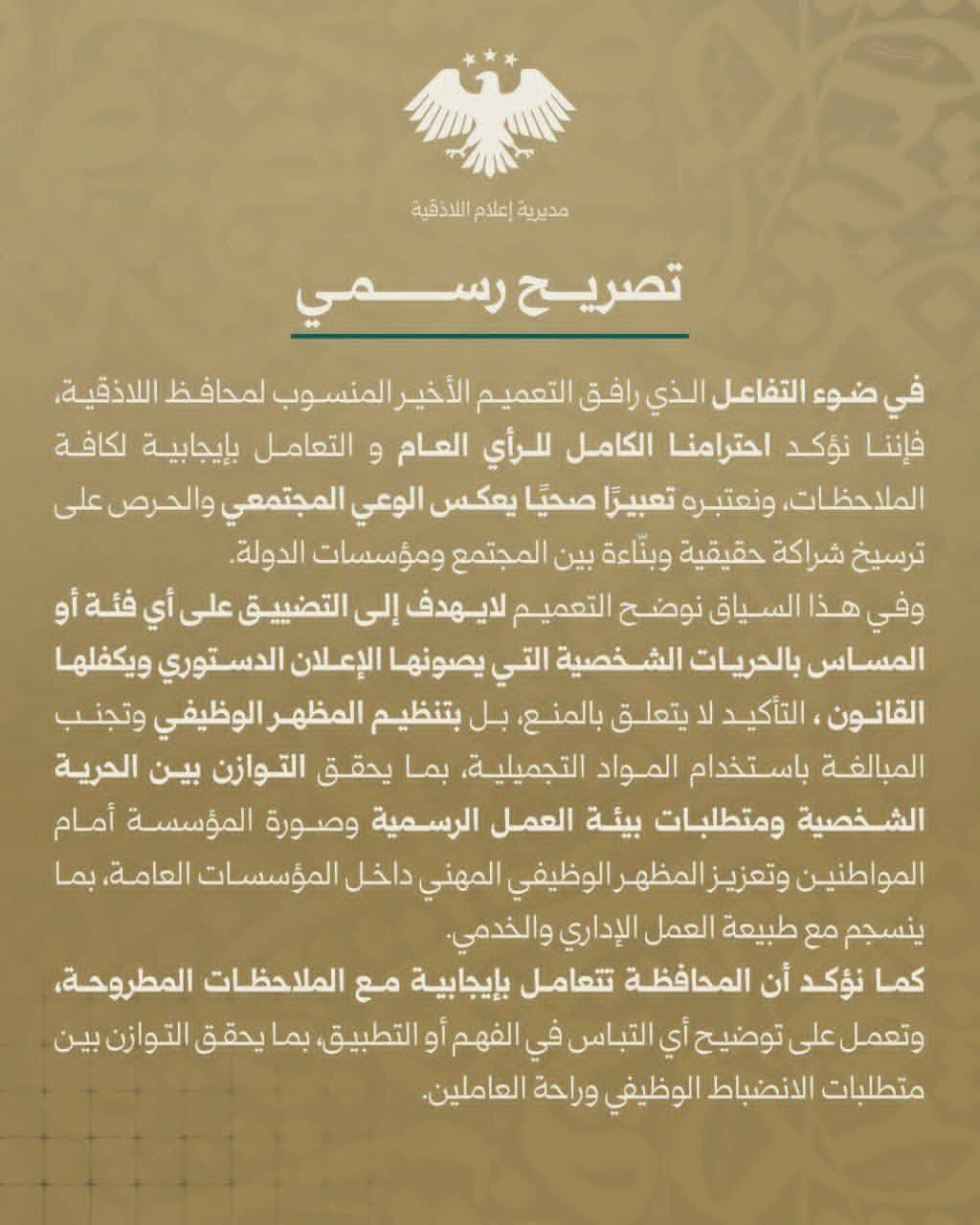
Although some accounts close to the government denied the authenticity of the circular, the Latakia Governorate’s Media Directorate confirmed its validity, justifying the decision by stating that it “does not aim to impose restrictions or infringe upon freedoms, but rather falls within the regulation of professional appearance and the avoidance of excess.”
This decision imposes discriminatory measures against women, as it restricts women’s personal appearance without imposing similar restrictions on men, thereby constituting interference in individual freedom.
Toward the Islamization of Public Space and the Gradual Restriction of Freedoms
These decisions come within a broader context marked by the escalation of hate speech and sectarian and religious incitement in Syria, as well as the dissemination of fatwas declaring certain sects apostate. This has heightened concerns about the gradual implementation of policies based on political Islam ideology and the establishment of supervisory bodies resembling “Committees for the Promotion of Virtue and the Prevention of Vice.”
The absence of independent judicial oversight, the lack of societal participation, and the imposition of sweeping restrictions on religious or moral grounds constitute a systematic violation of fundamental human rights principles and threaten pluralism and personal freedoms in Syria—at a stage that should be transitional rather than repressive.