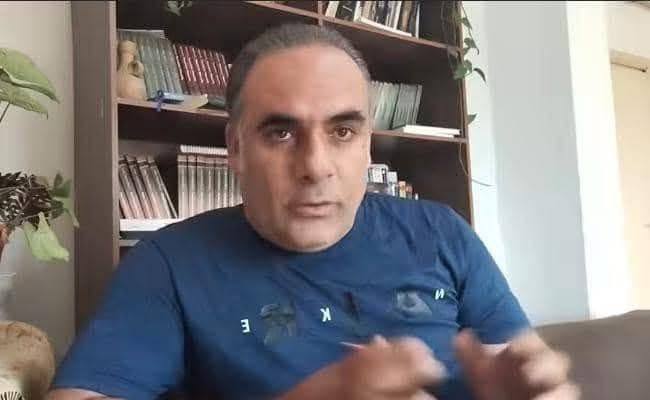
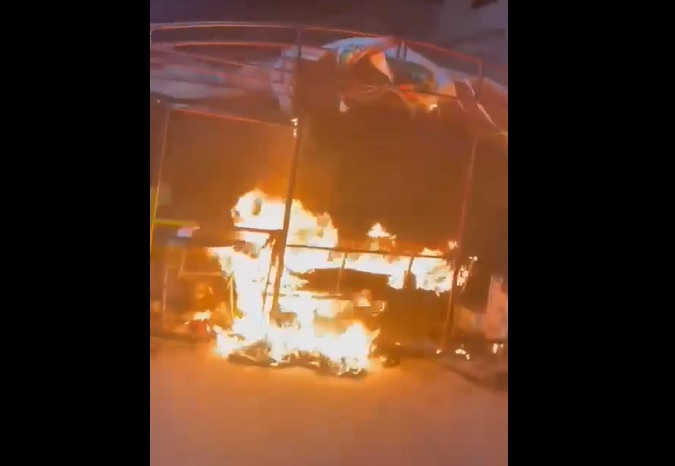
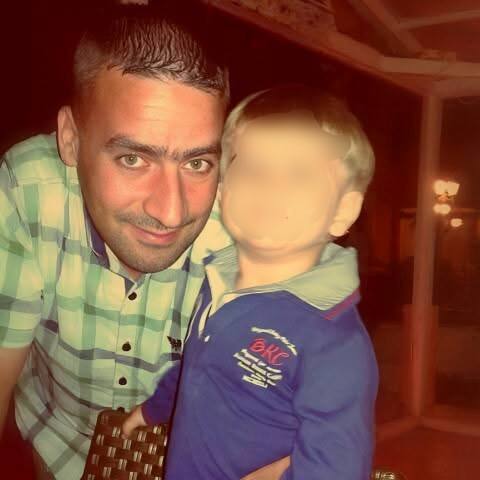
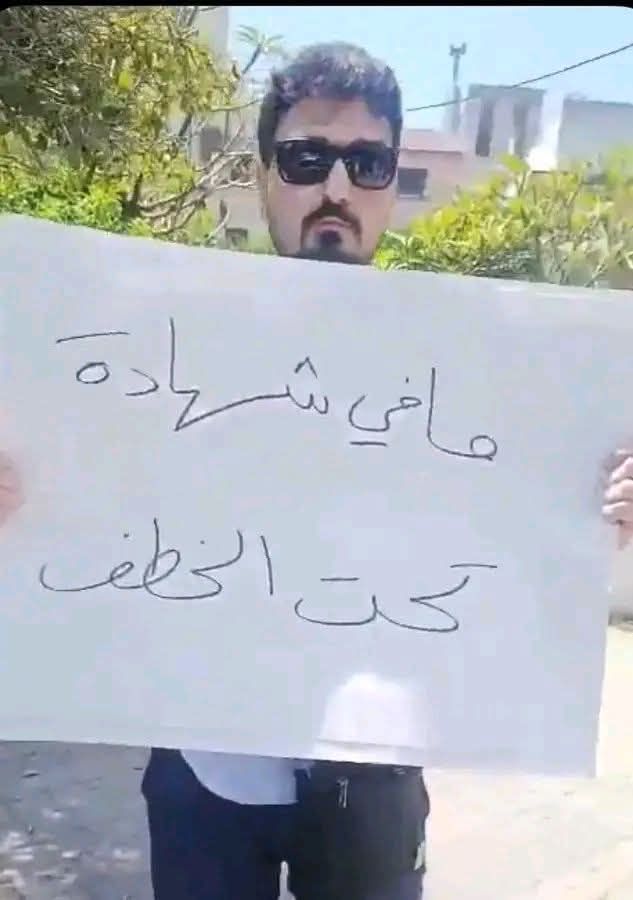
Journalist Alaa Mohammad, a member of the Alawite community, was killed on the evening of 21 February 2026 after being shot in the head inside his home in the village of Nini, affiliated to the al-Qardaha area in the countryside of Latakia Governorate, western Syria. The incident occurred hours after he published a live broadcast on YouTube in which he criticized the performance of the interim authority in Syria (Hay’at Tahrir al-Sham).
Hours prior to his assassination, Alaa Mohammad released a video on YouTube in which he directed explicit criticism at the interim authority in Syria, stating:
“This government will move forward and will take a long time before it can form something resembling an army — a quasi-national army with a single reference authority.”
He further added:
“Now, everywhere in Syria, there are forces and power structures. Both parties are affiliated with the Ministry of Defense, but one of these parties is independent and operates according to special agendas or foreign agendas. Does this help in building the state…”
In the course of his remarks, he questioned the outcome of fourteen months of the authority’s administration, considering — in his assessment — that what had been achieved amounted to “nothing.”
He also considered the statements of U.S. President Donald Trump, who said, “I put this president in place,” to have been made within the context of a speech directed to a domestic American audience.
Journalist Alaa Mohammad belonged to the Alawite sect and was a member of the “Civil Peace Committee” in Latakia, which is headed by Khaled al-Ahmad along with two other members. Available information further indicates that he had previously been detained by the General Security apparatus.
The right to life constitutes an inherent right that may not be arbitrarily restricted, and it is guaranteed under Article (3) of the Universal Declaration of Human Rights and Article (6) of the International Covenant on Civil and Political Rights.
Accordingly, the killing of the journalist inside his home, if it is established that the act was deliberate or that he was targeted in connection with his journalistic work or political opinions, may amount to an extrajudicial execution, which constitutes a grave violation of international human rights law.
Should a causal link be established between the journalist’s public statements and criticism of the authority and the act of his assassination, this may constitute a serious violation of freedom of opinion and expression and reflect a dangerous climate of intimidation against journalists.
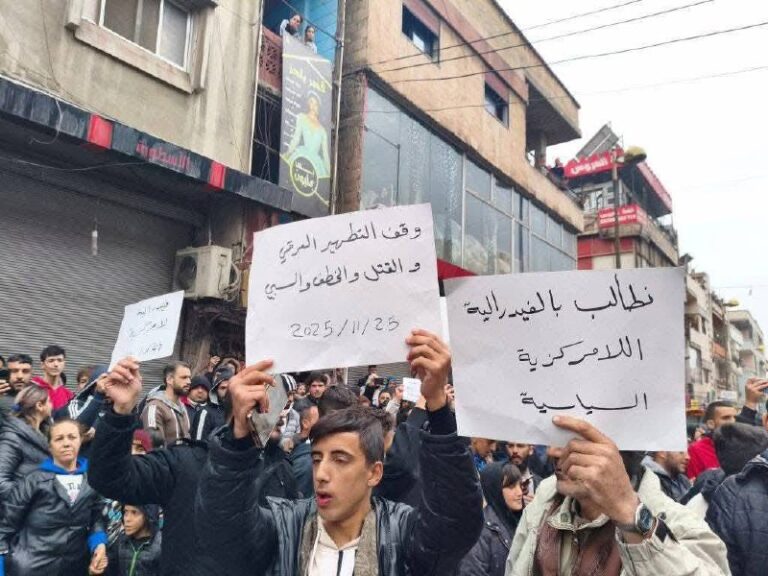
This incident occurs within the context of a fragile security environment characterized by the multiplicity of armed actors and the overlap of military and security competences, as the victim himself indicated in his final broadcast. Furthermore, the journalist’s affiliation with the Alawite community necessitates verification of any potentially sectarian motives, without presuming such motives in the absence of the results of an independent judicial investigation.