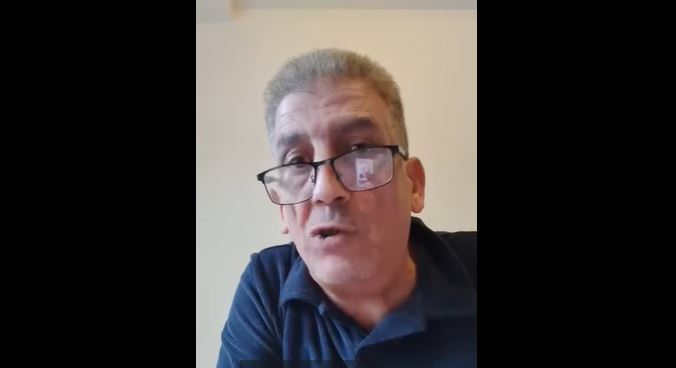
Video by individual Abdalrazak Alksour from Norway raises concerns regarding escalating sectarian incitement and its repercussions on civil peace in Syria
The “Rights Monitor Syria” platform has monitored a video posted by the individual Abdalrazak Alksour, residing in Norway, which contained inciting and exclusionary calls against members of the Alawite community. This raises serious concerns regarding the repercussions of this rhetoric on civil peace, especially in light of the escalating security tensions within Syria.
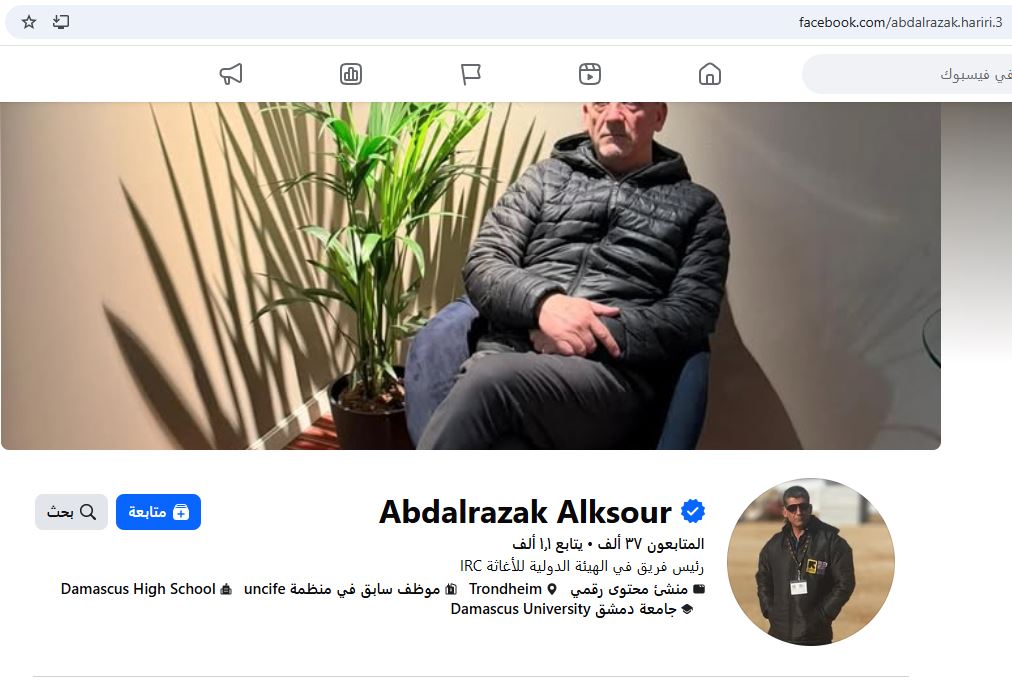
The account of the individual Abdalrazak Alksour, who identifies himself as a team leader at the International Rescue Committee (IRC) and a former employee of humanitarian organizations, appears to have published content containing explicit calls to refuse interaction with members of the Alawite community, to incite against them, and to abuse them, in rhetoric characterized by an exclusionary and discriminatory nature.
In a published video clip, Alksour directly called for boycotting members of the Alawite community and socially ostracizing them, utilizing derogatory and insulting phrases, and inciting for them to be shunned in public life. This constitutes hate speech and incitement that could lead to grave human rights violations.
In the recorded video, Alksour stated: “The ‘Qiqi’ [referring to the Alawite dialect] must not remain in Damascus; you must expel them to the mountains they came from. You must not deal with them, and they should walk in the street humiliated and disgraced. Wherever you see them, spit on them, O people of Damascus. Do not deal with them, do not sell to them, do not buy from them, and do not return their greetings. [They are] criminals, murderers…”
According to the information available on his account via the following link (https://www.facebook.com/abdalrazak.hariri.3), Alksour resides as a refugee in the city of Trondheim in the Kingdom of Norway.
These statements come in light of worrying security developments witnessed in the Sahl al-Ghab region in Hama Governorate, particularly in the village of Nabaa al-Tayyib, where tensions are escalating among local residents amid fears of mass retaliatory attacks in the near future. This coincides with the arrest of the individual Amjad Youssef, the primary suspect in committing the Tadamon neighborhood massacre in Damascus on April 16, 2013, the details of which were documented in video footage that showed mass executions of dozens of civilian detainees.
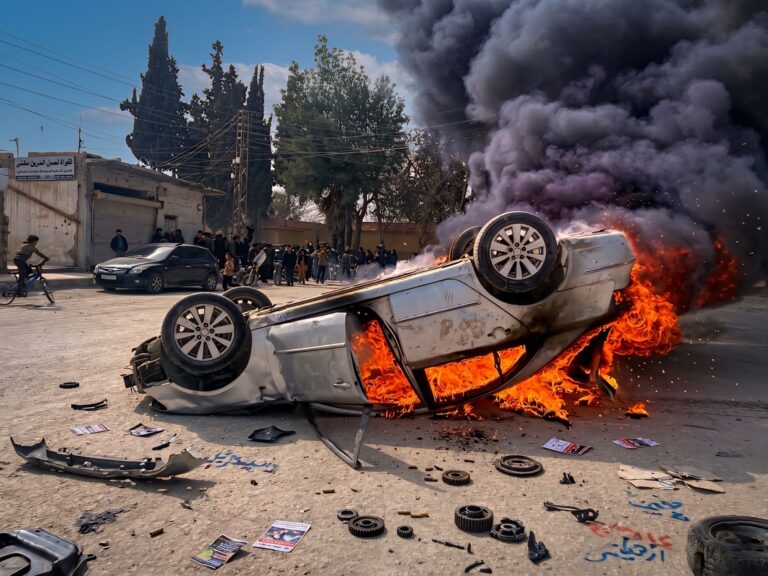
Field information has documented attempts by armed groups to head to the village of Nabaa al-Tayyib via the village of al-Rasif, before Public Security forces prevented them from reaching it. Information indicates that these groups later returned to the Shatha and Naour Shatha areas, where they engaged in acts of vandalism, including the destruction of commercial shops and civilian vehicles, in addition to attacking members of security checkpoints in the region.
Although the heavy security deployment in the Sahl al-Ghab region contributed to preventing direct attacks on residents, the risks remain present in light of continued incitement and tension.
“Rights Monitor Syria” emphasized a set of demands, most notably:
Protecting civilians in Sahl al-Ghab and preventing any retaliatory acts or collective punishment.
Stopping the discourse of incitement and hatred on social media platforms.
Ensuring that security agencies adhere to international law and standards in arrest operations.
Disclosing the fate of all detainees and ensuring their safety.
Holding accountable everyone proven to be involved in acts of sabotage or assault against civilians or property.