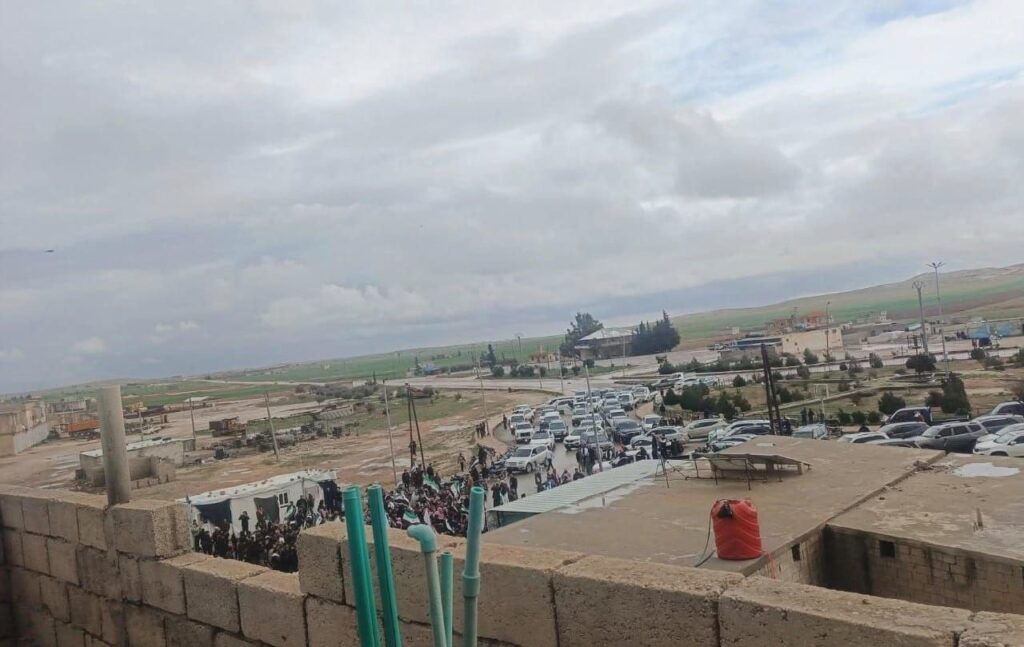
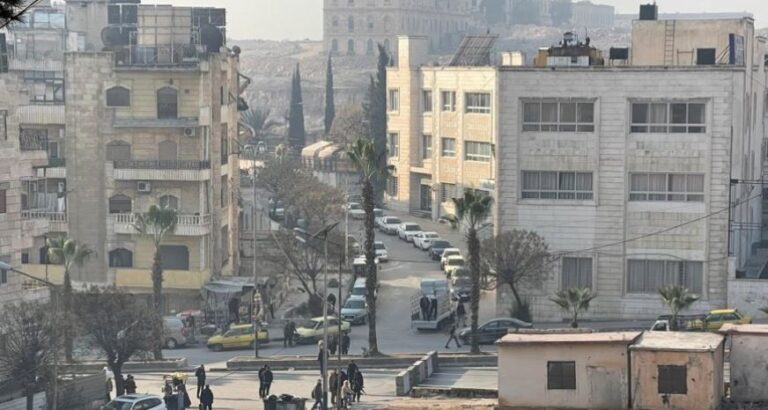
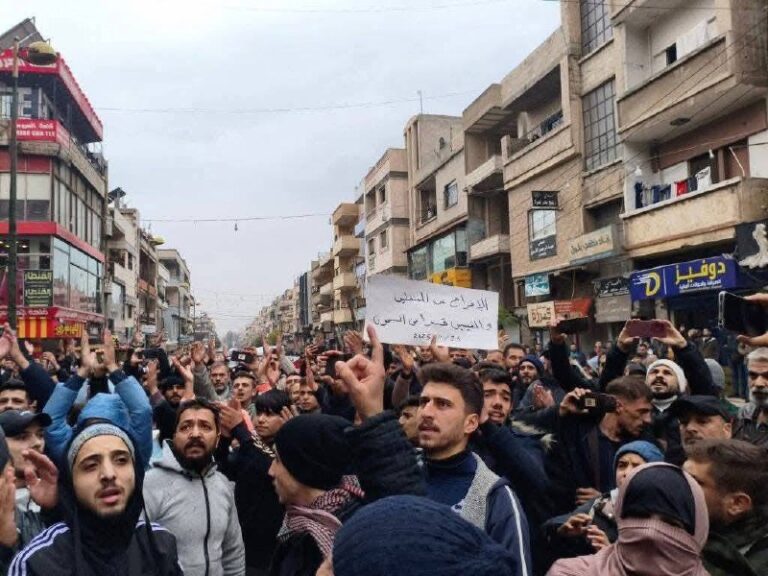
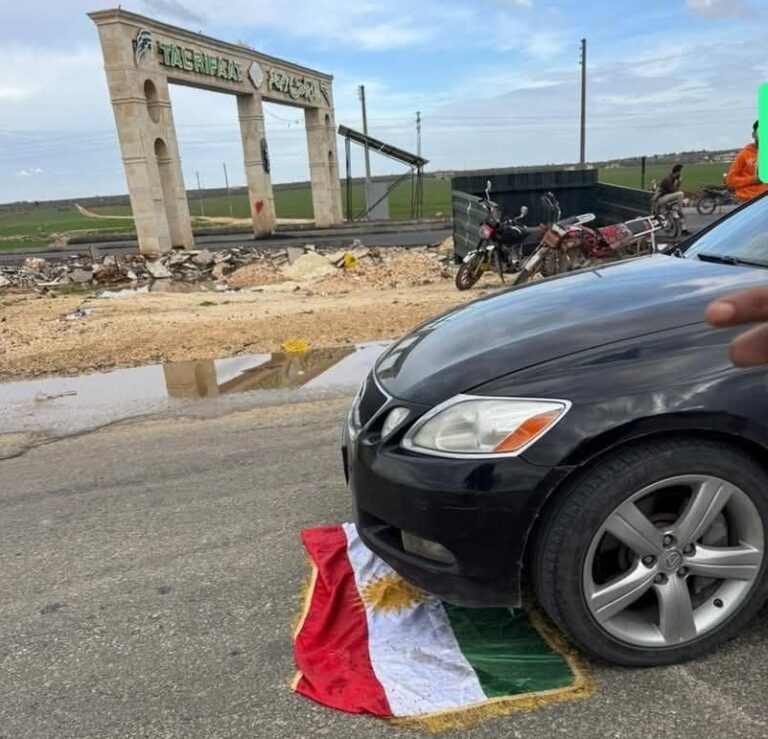
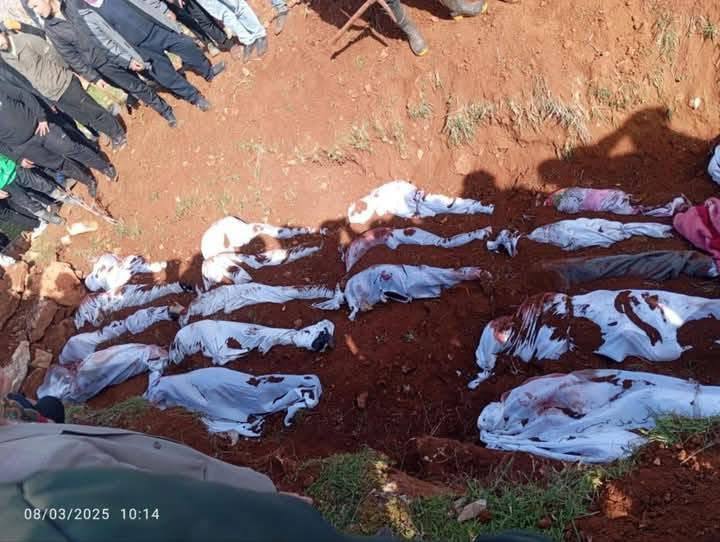
On March 22, 2026, the predominantly Kurdish rural areas of Kobani in northern Syria witnessed a series of nationalistic attacks and violations targeting Kurdish civilians and their properties. These incidents occurred within the context of escalating tensions following events associated with Newroz celebrations. The assaults were accompanied by provocative maneuvers and a near-total absence of effective security intervention, raising serious concerns regarding civilian safety and the surge of hate speech in the region.
Local sources reported racially motivated attacks in the village of Kharab Ashak, situated in the Kobani countryside, carried out by supporters of the Interim Authority against Kurdish residents. Furthermore, gatherings of these supporters were documented in the town of Jalabiyah, following the movement of vehicle convoys originating from the areas of Manbij, Jarabulus, and Shuyukh toward the city of Kobani.
In a documented incident, a Kurdish civilian from Kobani named Abdul Qader was assaulted while driving a pickup truck loaded with vegetables on the Manbij-Kobani road. He was attacked by approximately twenty individuals from the Manbij area, who proceeded to shatter his vehicle’s windows.
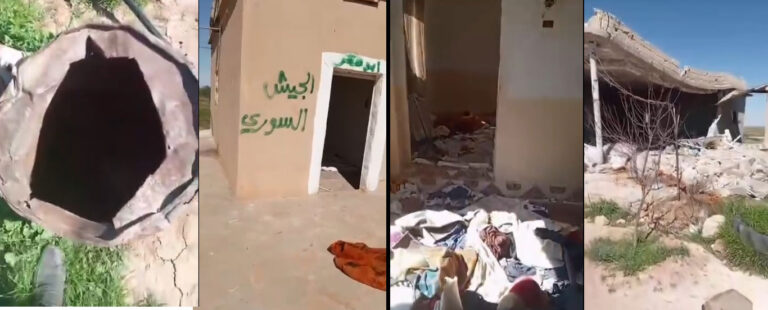
Provocative activities were also recorded in the village of Dekerman, alongside attacks on Kurdish villages in the Kobani countryside. These violations included the destruction of private property, the hurling of nationalistic slurs, and the scrawling of incendiary slogans on house walls. These events coincided with a total lack of intervention by security forces affiliated with the Interim Authority. Local sources noted that certain checkpoints belonging to the Kurdish Asayish forces had withdrawn to avoid direct confrontation.
In a related development, gunmen from the 74th Division were stationed at the “Dago” petrol station in Jalabiyah, despite the area being designated as a demilitarized zone, barring a joint checkpoint for General Security and the Asayish. Additionally, the Turkish-aligned “Amshat” and “Hamzat” factions returned to the town following a previous withdrawal stipulated by an agreement.
Assaults on civilian property were also recorded in the town of Ain Issa in the Raqqa countryside, where shops belonging to Kurdish citizens were vandalized.
These developments were accompanied by large-scale incitement across social media platforms, where hate speech and messages directed against Kurds were circulated, prompting questions regarding the role of regional actors in fueling the escalation.
These events stem from tensions that began on March 21, 2026, following an incident involving the lowering of the Syrian flag during Newroz celebrations in Kobani, which subsequently triggered a widespread wave of inflammatory rhetoric.
Several areas in the northern Aleppo countryside and the city of Afrin witnessed violations against Kurdish civilians, including physical assault, property destruction, the burning of Kurdish flags, and the prohibition of celebrations. Cases of road closures and the targeting of Kurdish civilians during transit were also documented.
In the city of Azaz, a Kurdish youth was beaten and his motorcycle was set on fire for raising the Kurdish flag. Meanwhile, in neighborhoods within the city of Aleppo, Kurdish symbols were forcibly removed from vehicles and residences.
Reports further indicated the involvement or negligence of certain security personnel in failing to prevent these attacks, reflecting a weak official response to civilian protection.
The facts documented during March 21 and 22, 2026, indicate a dangerous escalation of nationalistic violations against Kurds in northern Syria. These include physical assaults, destruction of property, public incitement, restriction of movement, and the targeting of cultural symbols. This occurs amidst a manifest absence or failure of law enforcement agencies to act, threatening a further deterioration of the security situation and civil peace in the region.