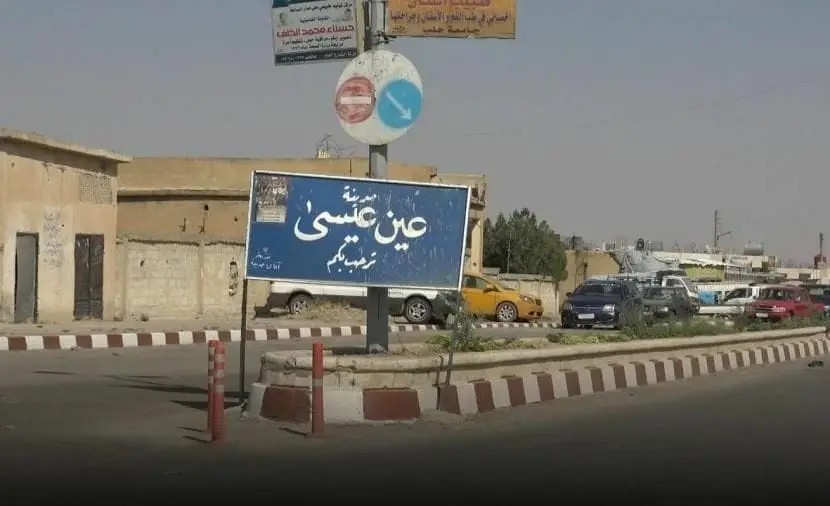
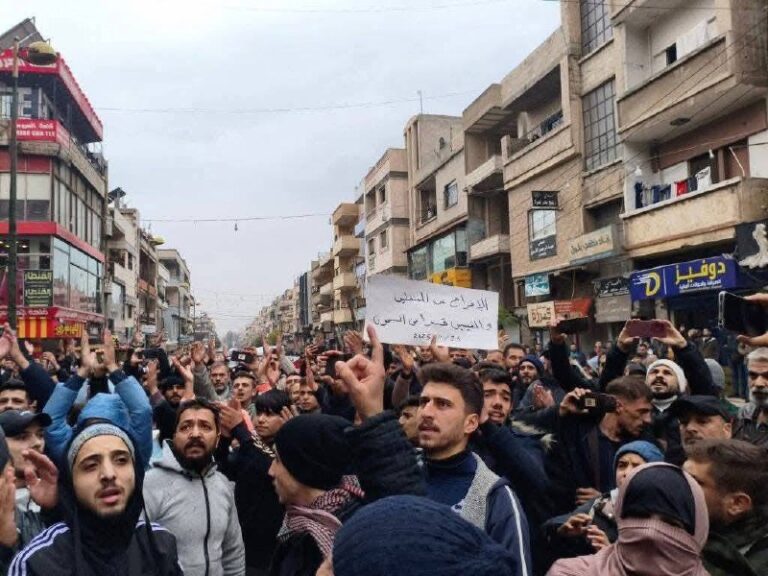
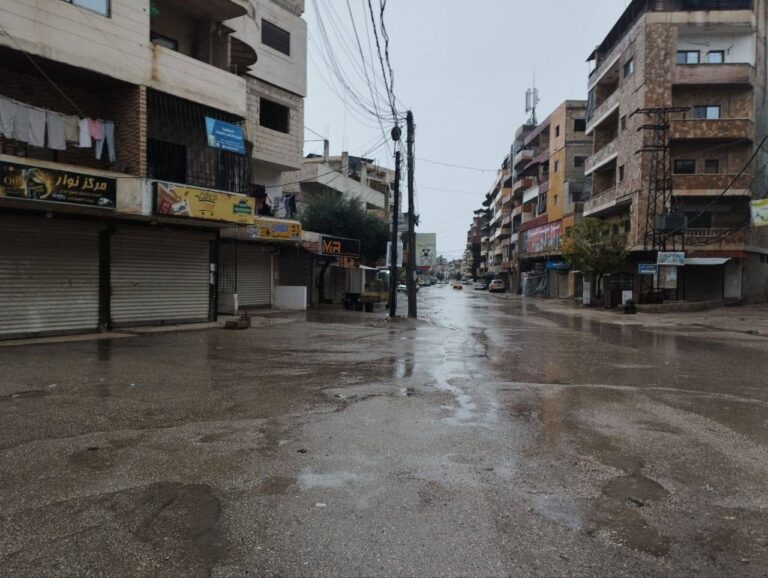
The town of Ain Issa, located in the countryside of Raqqa in northern Syria, is witnessing a dangerous escalation in threats targeting Kurdish civilians residing in the area. Local sources report that groups affiliated with supporters of the Interim Authority have issued direct threats to residents, presenting them with an ultimatum: either evacuate the town or face the burning of their homes and properties. This occurs amidst a total absence of any security entity capable of protecting the population or curbing these violations.
This escalation coincides with the deployment of armed groups loyal to the Interim Authority across vast areas surrounding the city of Kobani, following the withdrawal of local Kurdish forces from several towns and villages, including Jalabiyya and Kharab Ashk, in addition to dozens of other villages.
According to local sources, these groups have raised flags associated with “Hay’at Tahrir al-Sham” in several locations. Furthermore, incidents of vandalism and targeting of commercial shops owned by civilians have been recorded. Intensive security checkpoints have also been established on main roads and intersections, resulting in the restriction of residents’ movement and an increase in fear and anxiety among the populace.
These incidents fall within a broader context of escalating violations against Kurdish civilians in northern Syria, which became notably prominent on March 21, 2026, coinciding with Newroz celebrations. A series of violations has been documented in the northern countryside of Aleppo and the city of Afrin, including physical assaults, the prohibition of celebrations, and the burning of Kurdish cultural symbols, as well as the targeting of civilians during transit and the closure of vital roads.
On March 22, 2026, areas in the Kobani countryside witnessed similar incidents characterized by an ethnic dimension, accompanied by the proliferation of inflammatory rhetoric against Kurds and a conspicuous absence of any effective security role. This raises the probability of further violence and threatens civilian safety.
These data points indicate an escalating pattern of threats and violations of an ethno-nationalist character against the Kurdish population in several regions of northern Syria, amidst a clear security vacuum. This raises serious concerns regarding a deteriorating humanitarian situation and the potential for waves of forced displacement or wider-scale acts of violence should the absence of protection and accountability mechanisms persist.