The renaming of several streets within the city of Homs has become a focal point of widespread controversy and criticism, following an official decree issued by the Executive Office of the Homs City Council to rename streets originally named after prominent historical figures. This move raises human rights questions regarding the extent of respect for collective memory and cultural and religious diversity within public spaces.
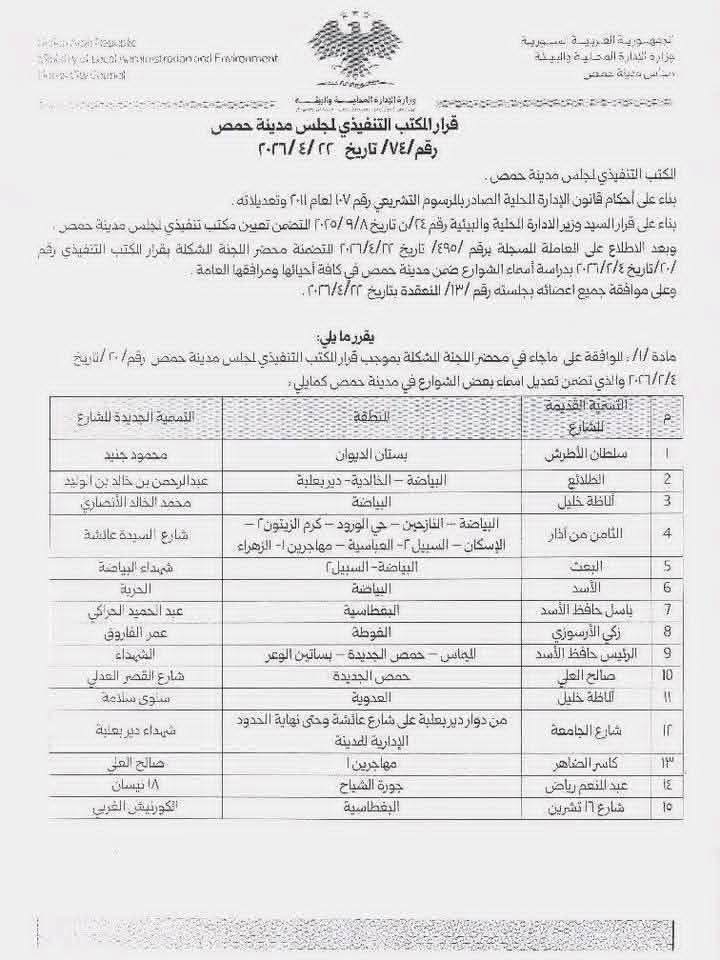
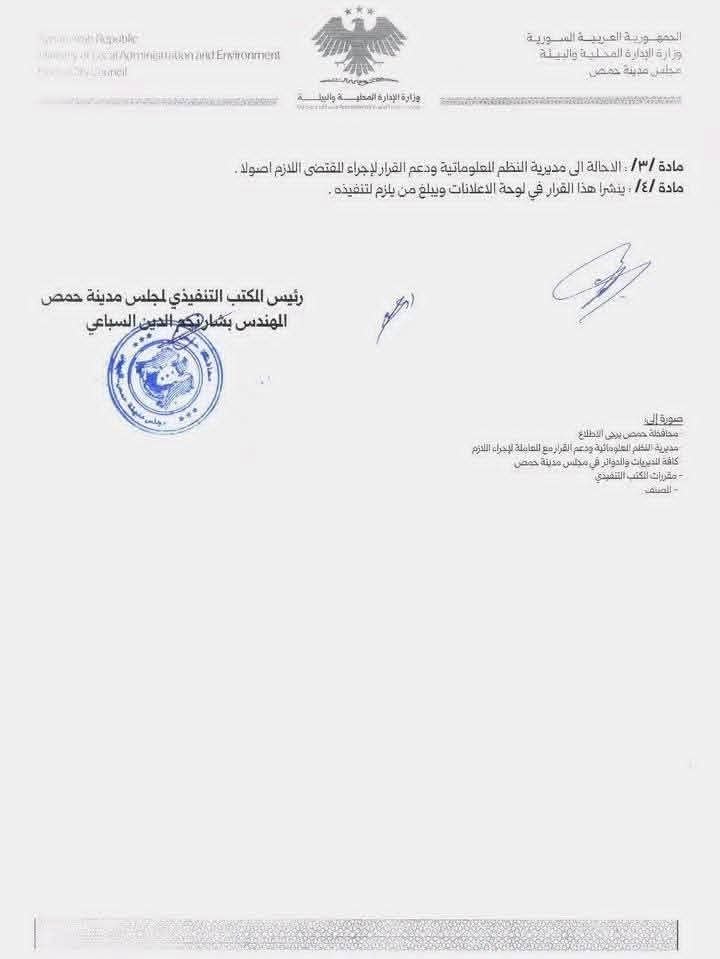
The Executive Office of the Homs City Council issued an official decree based on the minutes of the committee specialized in naming streets and public facilities, mandating the modification of several street names within the city. According to the document, the decree included changing the name of “Sultan al-Atrash” street—one of the most prominent historical figures of the Druze community—to “Mahmoud Junaid.” Furthermore, the name of “Zaki al-Arsuzi” was changed to “Omar al-Farouq,” and “Almaza Khalil” to “Muhammad al-Khaled al-Ansari.”
The decree also included renaming “Saleh al-Ali” street—a historical figure belonging to the Alawite community—to “Palace of Justice Street” (Qasr al-Adl), while re-assigning the name “Saleh al-Ali” to a different street in the Al-Muhajirin area. This has prompted questions regarding the motives behind relocating the name rather than maintaining it in its original location.
The decision triggered a wave of criticism among local circles, where critics viewed it as a step that may reflect a trend toward reshaping local memory, particularly in the absence of public debate or transparency regarding the criteria adopted for selecting new names or relocating previous ones. Some have warned that these measures may carry political, ideological, or sectarian dimensions, especially in a city of diverse affiliations like Homs.
In a related context, observers noted that this step is part of a broader pattern witnessed across several Syrian regions in recent months, which included changing the names of schools and public facilities, replacing the names of national or secular figures with names of a general religious character.
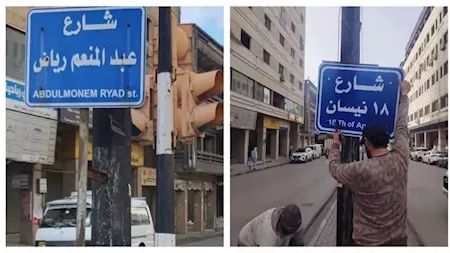
Coinciding with these decisions, changing the name of a street named after General Abdul Munim Riad in Homs sparked angry reactions in Egyptian popular and media circles. Abdul Munim Riad is considered one of the most prominent military leaders of the 20th century; he was killed during military operations on the front lines against Israel and is viewed as a national and Arab icon.
Critics argued that changing the name of a street bearing his name could be interpreted as an affront to a shared historical symbolism, especially given the historical relations between Syria and Egypt, which witnessed stages of political unity and integration, in addition to the continuous social ties between the two peoples.
Human Rights Context:
These measures raise human rights concerns related to the freedom of community participation in the management of local affairs, respect for cultural and religious pluralism, and the right to preserve historical memory and protect it from unilateral reshaping. Observers believe that the lack of transparency and clear criteria in such decisions may exacerbate societal divisions and affect civil peace in regions that have experienced complex conflicts.
The issue of renaming streets in Homs reflects a broader dilemma regarding the management of public space and collective memory in Syria, amid increasing demands to ensure broader community participation and the adoption of transparent standards that respect the historical and cultural diversity of the population.