The Appointment of Foreign Fighters to Leadership Positions in the New Syrian Army: The Case of Abdulaziz Dawood Hodaverdi from East Turkestan as a Model
This report documents the case of the appointment and honoring of Brigadier General Abdulaziz Dawood Hodaverdi (also known as Khodabirdi), originating from East Turkestan, as an indicative example of a broader policy adopted by the interim authority in Syria, “Hay’at Tahrir al-Sham,” which involves appointing foreign fighters to leadership positions in the army and security services. This has occurred in parallel with the dismissal of tens of thousands of Syrian military personnel on sectarian or political grounds, the exclusion of officers who defected from the former regime from leadership positions, and the concentration of military and security decision-making within Hay’at Tahrir al-Sham and foreign factions or those loyal to it.
First: The Personal and Military Background of Abdulaziz Dawood Hodaverdi
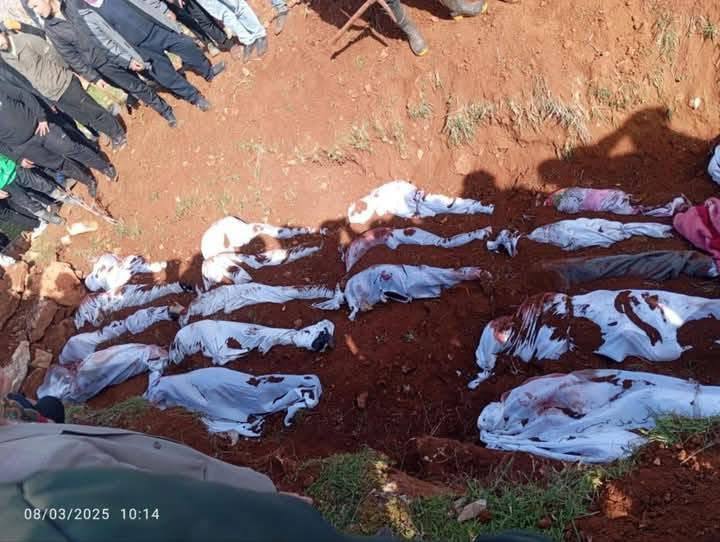
Abdulaziz Dawood Hodaverdi (or Khodabirdi) is a foreign fighter originating from East Turkestan. His name emerged as one of the leaders of what is known as the “84th Division,” affiliated with the Syrian army formed by “Hay’at Tahrir al-Sham” after the fall of Bashar al-Assad’s regime. Media sources indicate that the 84th Division includes foreign leaders from several countries and took part in battles alongside the forces of the interim authority, particularly in the Syrian coastal battles in March 2025 and the Suwayda battles in July 2025, which led to acts of violence and serious crimes against civilians from the Alawite and Druze sects.
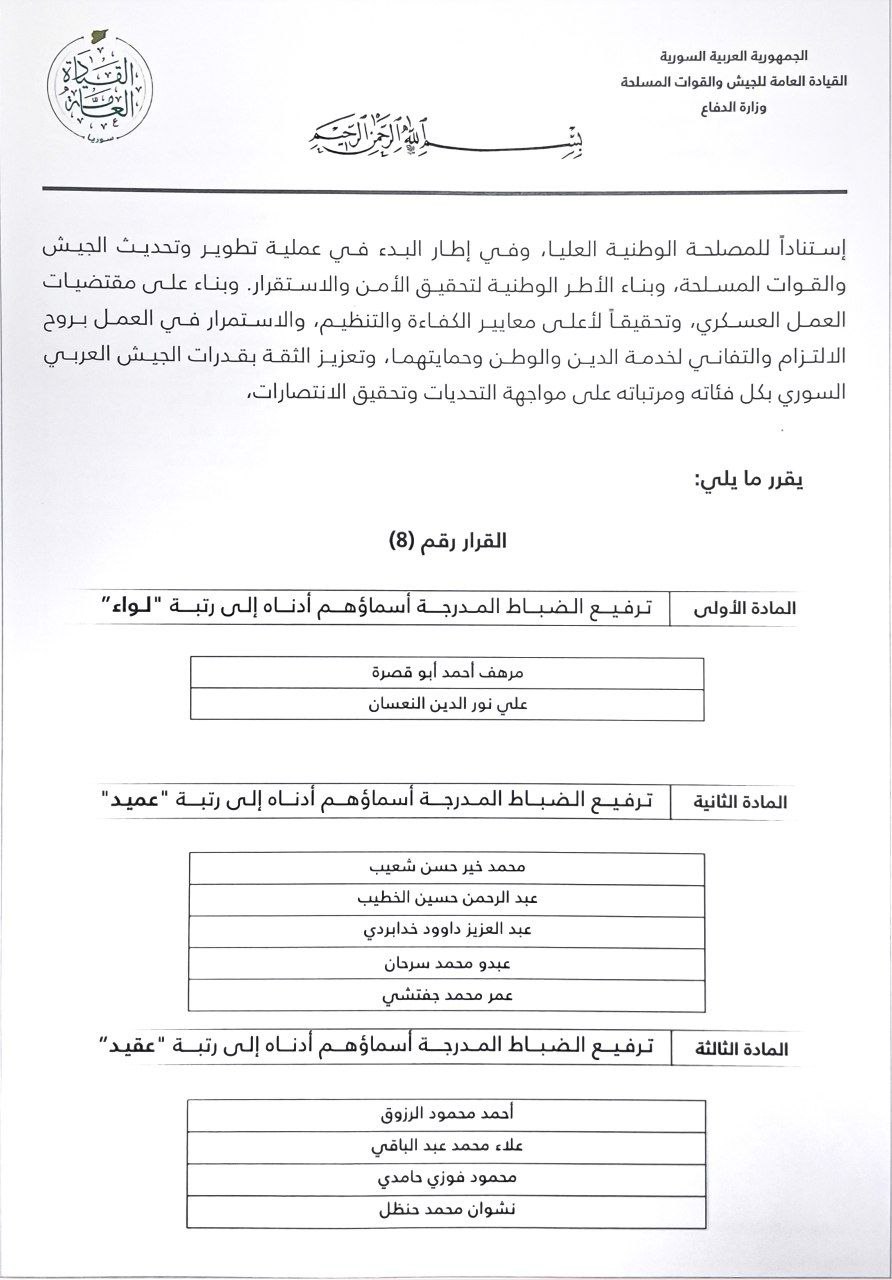
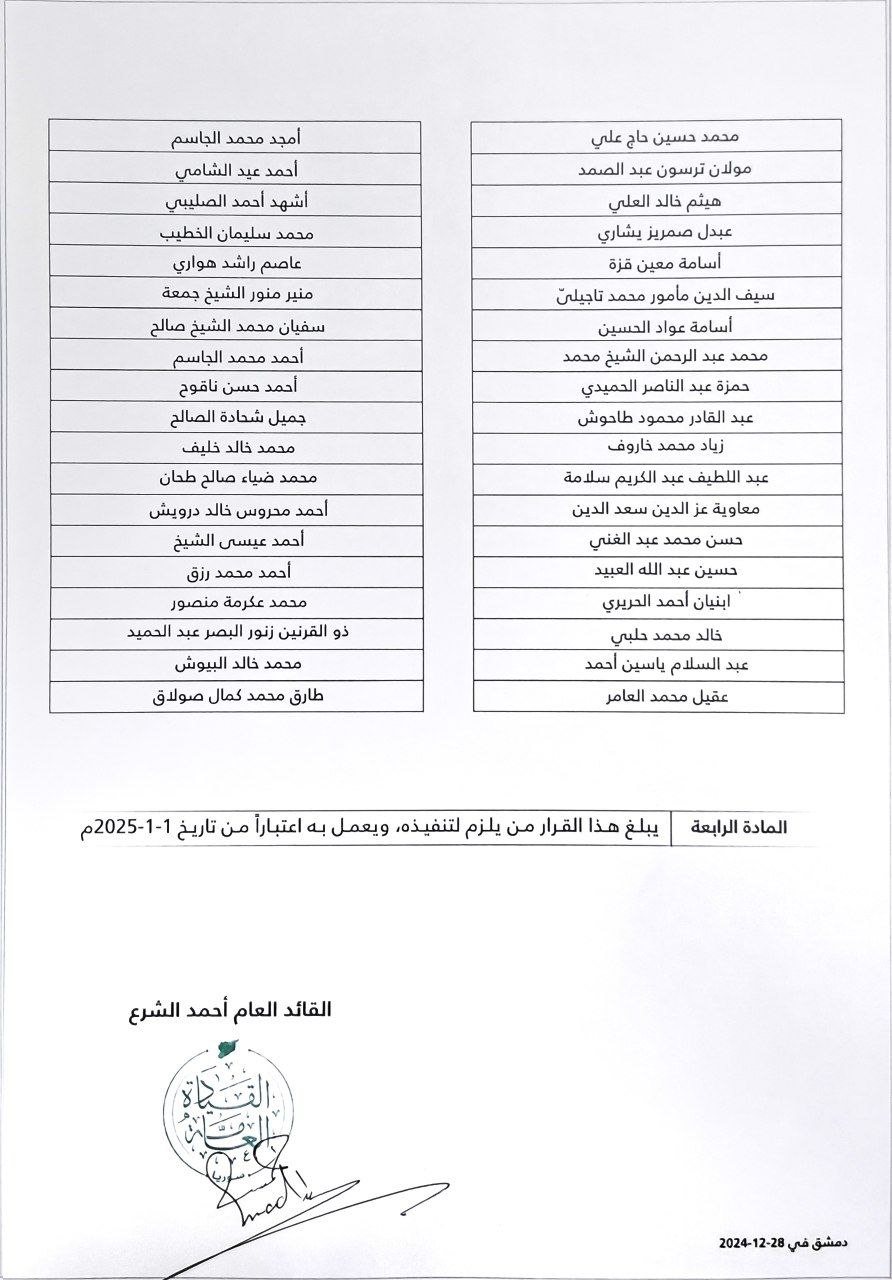
The head of the interim authority in Syria, Ahmad al-Shar‘a (Abu Muhammad al-Jolani), issued Decision No. /8/ on 28 December 2024, which stipulated in its second article the granting of the rank of brigadier general in the Syrian army to Abdulaziz Dawood Khodabirdi, along with other foreign fighters of various nationalities, including Albania, Tajikistan, Egypt, and other countries.
Second: The Incident of Public Honoring and Its Implications
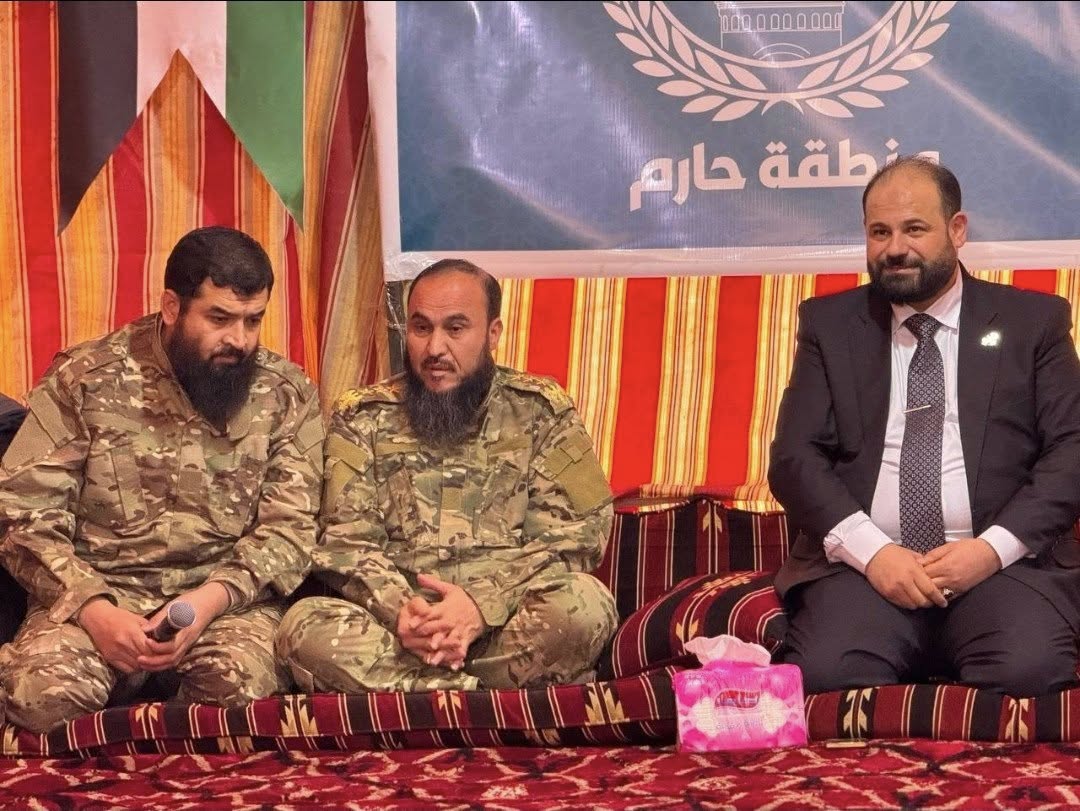
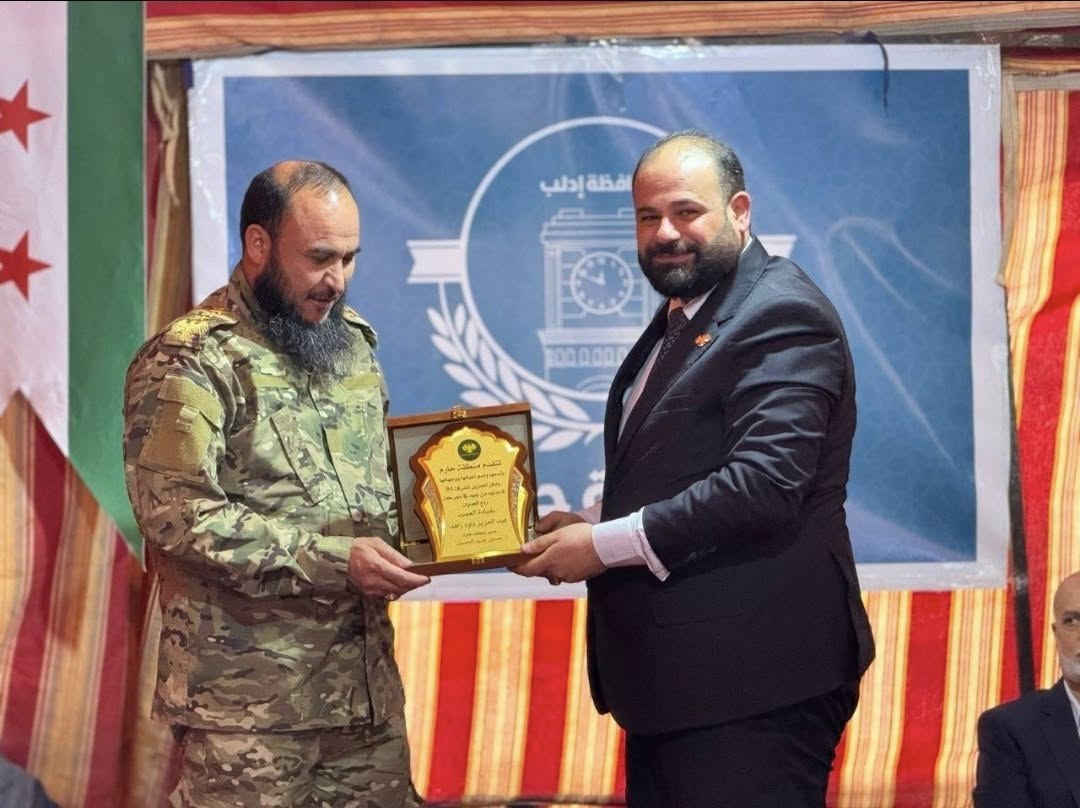
On 18 December 2025, an image circulated on social media showing Abdulaziz Dawood Hodaverdi being honored by the director of the Harem area in Idlib Governorate, Hussein Junaid. This appearance was described as rare, but it carried clear political and security implications, as it came at a time when the authority itself, through its media discourse, was declaring its intention to address the issue of “foreign fighters” or to deport them.
Honoring a foreign officer who had been granted a high rank in the army, in an official occasion, reveals a wide gap between declared rhetoric and actual practice, and indicates that the foreign presence within the core of military power remains relied upon and even rewarded.
Third: A Broader Context of Exclusion and Restructuring
The Hodaverdi case comes within a broader context of the restructuring of the military and security institutions in areas under the control of the de facto authority, characterized by several interrelated features:
Widespread dismissal of Syrians: Tens of thousands of Syrian military personnel and security employees were dismissed on the basis of sectarian affiliation or suspicion of political loyalty, without transparent judicial procedures or declared professional standards.
Exclusion of defected officers: Despite the fact that many officers who defected from the former regime possess formal military experience, they were marginalized or excluded from leadership positions in favor of figures affiliated with Hay’at Tahrir al-Sham or foreign factions.
Monopolization of leadership by a single entity: Military and security leadership was concentrated in the hands of Hay’at Tahrir al-Sham and a network of foreign fighters or Syrians affiliated with it, leading to the absence of the principle of national representation within emerging institutions.
Fourth: The Contradiction Between Rhetoric and Practice Regarding “Foreigners”
Despite the escalation of statements about deporting foreign fighters or ending their influence, on-the-ground realities show their continued presence in sensitive positions and even their official honoring. This is not limited to the Hodaverdi case, but intersects with other reports about:
The settlement of foreign fighters, including Uyghurs, in homes belonging to forcibly displaced residents in the Afrin countryside.
Circulation of information about plans to naturalize tens of thousands of foreign fighters and grant them Syrian citizenship.
The continued activity of foreign jihadist groups and their retention of margins of movement and influence within the existing security structure.
This contradiction undermines the credibility of any claim of institutional reform or restoration of sovereign decision-making, and turns the “foreigners” file into a tool of selective management subject to narrow political and security interests.
Fifth: Human Rights and Sovereignty Implications
The appointment of foreigners to leadership positions in the army, in contrast to the exclusion of Syrians, carries serious human rights and sovereignty implications, most notably:
Violation of the principle of equality in access to public office.
Undermining the collective right of Syrians to manage their own military and security institutions.
Deepening societal divisions and linking sovereign decision-making to non-national loyalties.
Moreover, the continued ambiguity surrounding these policies contradicts any serious path toward rebuilding trust or achieving a political transition that respects the basic standards of human rights and the rule of law.
Conclusion
The case of Brigadier General Abdulaziz Dawood Hodaverdi constitutes a clear example of a broader pattern of policies pursued by the de facto authority in Syria, whereby the influence of foreign fighters is entrenched within power structures, in parallel with the marginalization and exclusion of Syrians. The absence of transparency, the contradiction between rhetoric and practice, and the continued non-Syrian dominance over decision-making centers all raise serious questions about the future of sovereignty and rights in Syria.