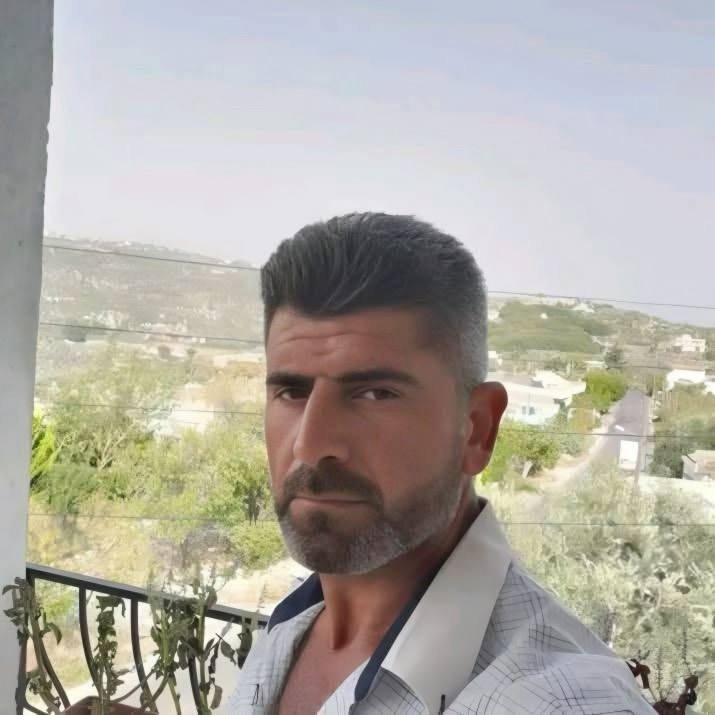
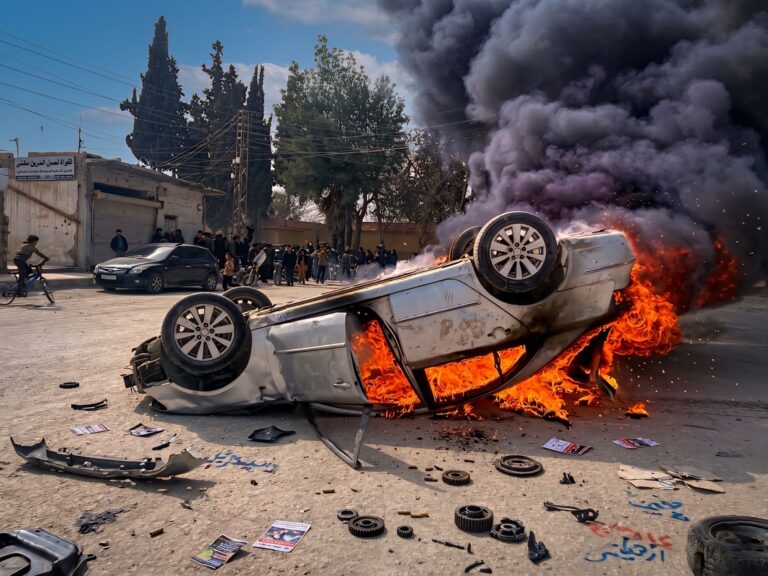
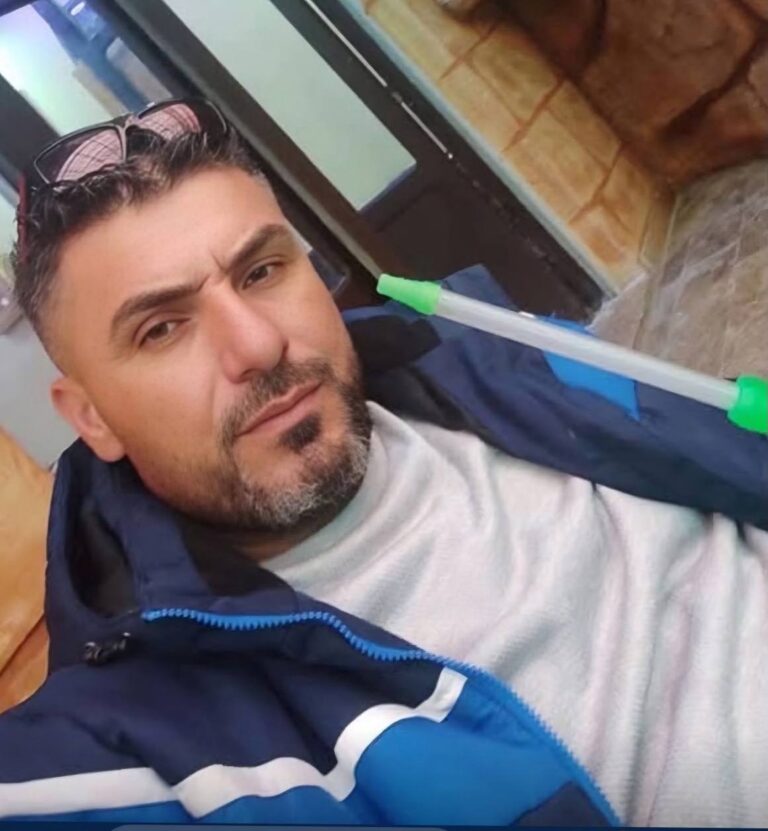
Citizen Alaa Ibrahim Khuzama, known by the alias “Abu Jaafar” and a member of the Alawite sect, was killed after his body was discovered on April 12, 2026, in the Barada River area of rural Damascus. This followed a five-day period during which contact with him was lost after he departed for work as a taxi driver. This incident falls within a disturbing context of escalating violence and violations targeting civilians based on sectarian affiliations in Syria, amid persistent security chaos and an absence of accountability.
The victim originated from the Baniyas region in the Tartus countryside and belonged to the Alawite sect. Information indicates that he worked in the transportation sector as a means of livelihood.
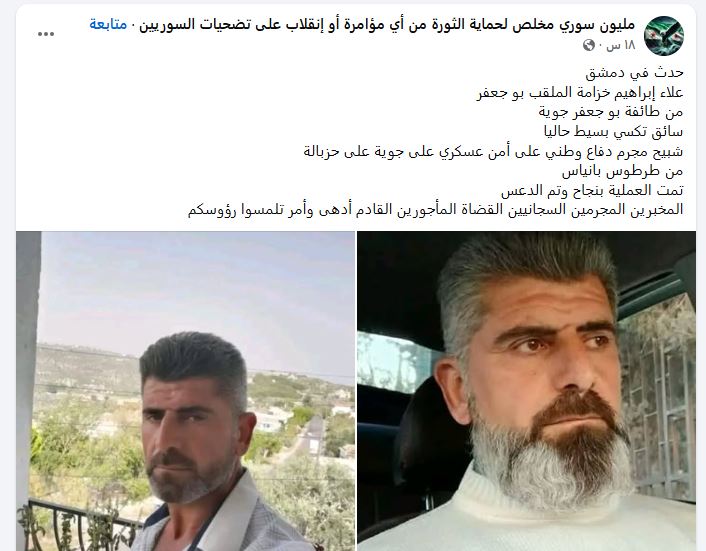
Social media pages managed by loyalists of the authorities in Damascus circulated posts containing inciteful rhetoric and an implicit admission of responsibility for the killing. The victim was described in provocative terms and accused of affiliation with military and security entities, alongside references to the “execution of the operation” and threats of continued similar acts. This discourse reflects dangerous indicators of fueling violence and hatred and may constitute evidence of potential motives characterized by a sectarian or retaliatory nature.
This incident occurs within a broader context of gross violations witnessed in areas of Damascus and its countryside recently, which have affected civilians of diverse sectarian and religious backgrounds.
In a previous incident, citizen Madyan Ismail Zeno (56 years old), of the Ismaili sect, died on April 10, 2026, from injuries sustained after being subjected to gunfire approximately a week prior in the Eastern Dummar area of Damascus. He suffered multiple gunshot wounds to the neck, lungs, and back resulting from an attack carried out by unidentified gunmen.
These occurrences reflect an escalating pattern of violations that include:
Extrajudicial killing
Targeting based on sectarian affiliation
Kidnapping for ransom
Persistent threats against civilians
Furthermore, they indicate the growing influence of armed groups with a sectarian character, in light of the weakness of law enforcement institutions and the absence of effective accountability mechanisms.
The killing of Alaa Khuzama represents a new example of the increasing risks threatening the lives of civilians in Syria, particularly amid the escalation of violence linked to sectarian identity. These incidents underscore the urgent need for immediate measures to protect civilians, ensure accountability for violations, and put an end to the hate speech and incitement that contribute to fueling the cycle of violence.