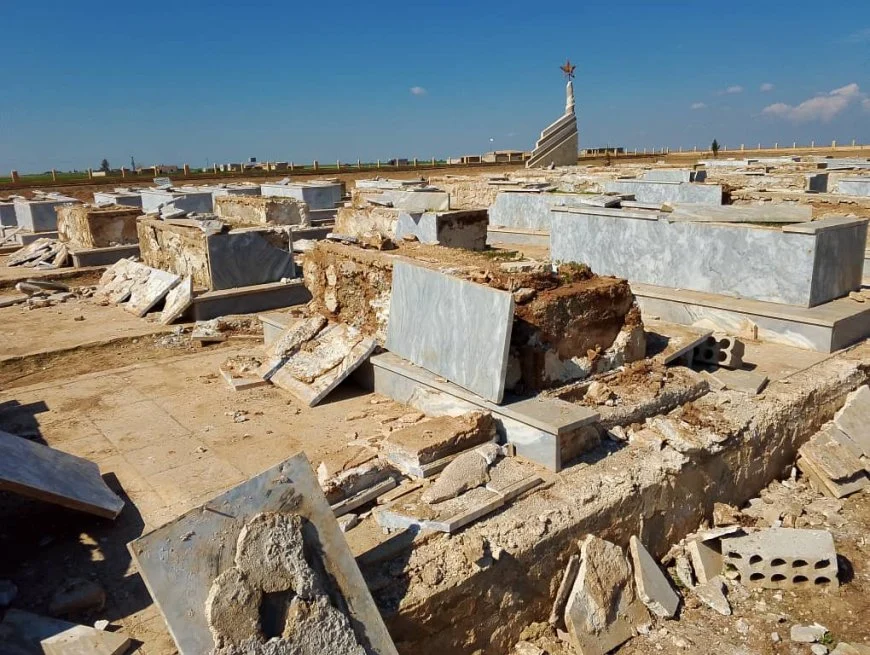
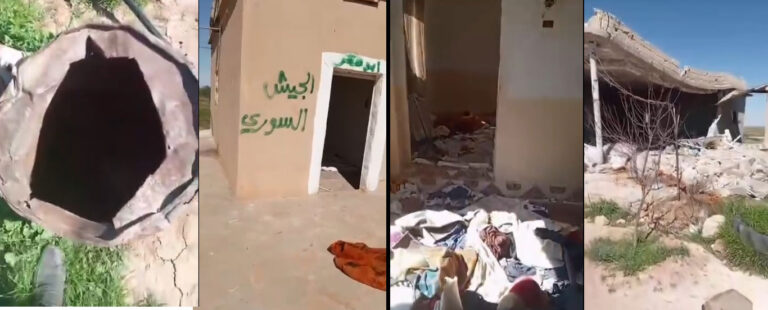
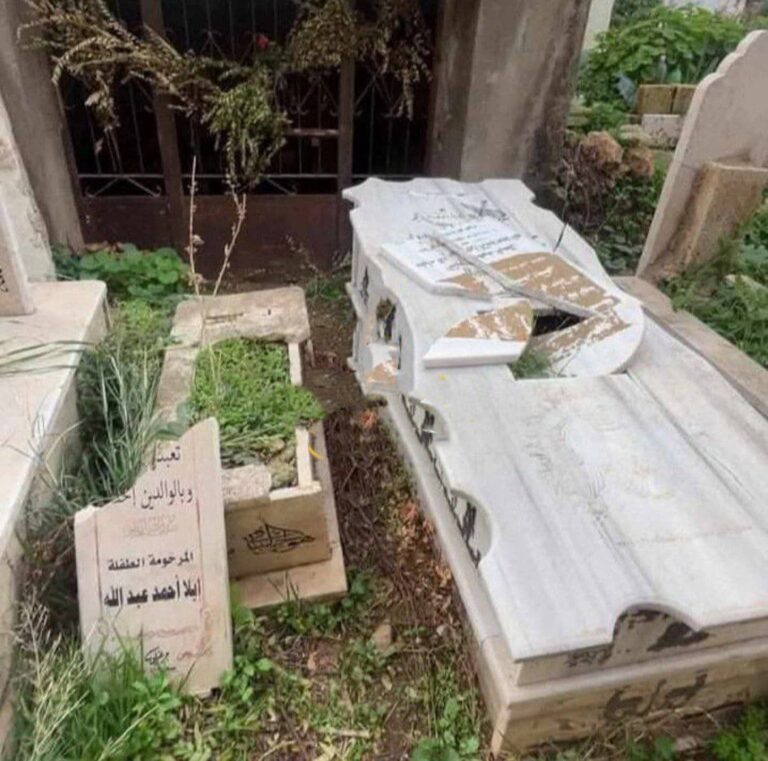
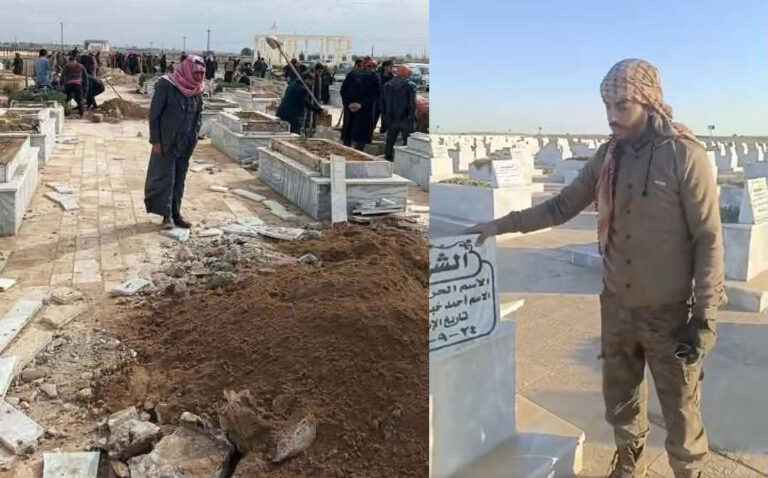
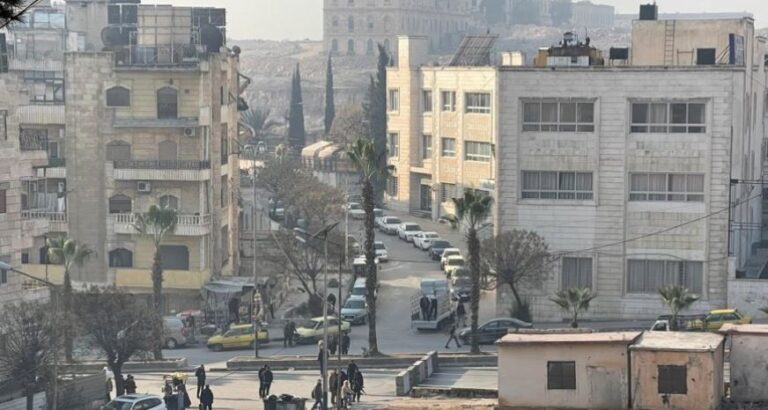
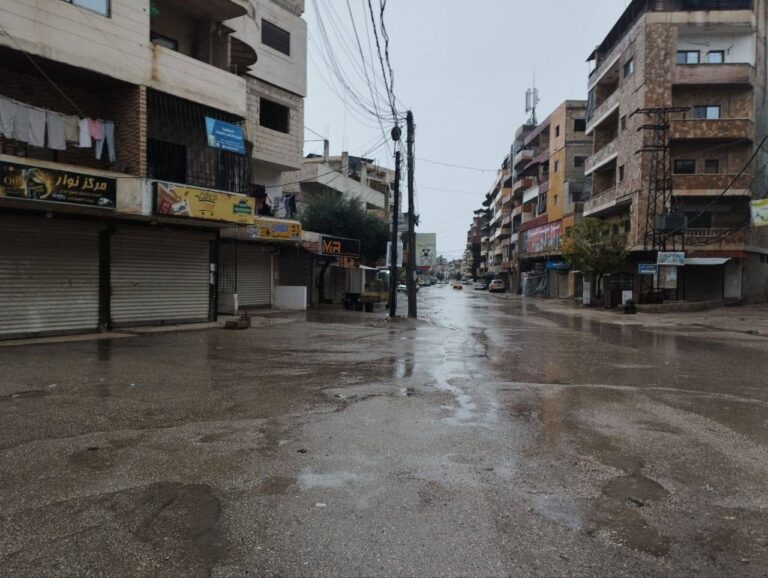
Video footage circulated on 24 February 2026 shows acts of vandalism against the graves of fighters from the “Syrian Democratic Forces” (SDF) in the city of Tel Hamis, located in the countryside of Al-Qamishli in Al-Hasakah Governorate, northeastern Syria. The incident forms part of a series of attacks targeting the cemeteries of fighters in several cities across northern and eastern Syria since the beginning of this year, amid ongoing military and security escalation in the region.
First: Vandalism of the SDF Fighters’ Cemetery in Tel Hamis
According to documentation by Kurdish media outlets, an armed group arriving from Deir ez-Zor Governorate entered the city of Tel Hamis and proceeded to vandalize graves belonging to male and female fighters from Tel Hamis and its surrounding countryside who had been killed during battles against the Islamic State (ISIS).
The targeted cemetery contains the remains of fighters who had joined the ranks of the SDF during military operations against ISIS, lending the attack a dimension that affects the local collective memory associated with the period of conflict with ISIS.
Second: Documented Incidents in Al-Shaddadi, Manbij, and Raqqa
1. Al-Shaddadi Town – Al-Hasakah Countryside
On 21 January 2026, a widely circulated video clip showed a member of what is referred to as the “Syrian Arab Army,” under the leadership of Hay’at Tahrir al-Sham, breaking gravestones belonging to SDF fighters in the town of Al-Shaddadi in northern Syria.
The recording shows derogatory statements directed at the deceased, including the use of insulting descriptions of the graves, accompanied by the chanting of religious slogans, in a scene depicting a direct assault on gravestones and the sanctity of cemeteries.
2. The City of Manbij
Between 11 and 13 February 2026, footage circulated showing a number of local residents exhuming graves in a cemetery belonging to SDF fighters in the city of Manbij, following claims that the land on which the cemetery was established was privately owned by individuals who demanded its evacuation.
However, local sources reported that the land is classified as public property belonging to the state. The footage also revealed a state of chaos during the transfer of remains, in the absence of clear official mechanisms or specialized judicial or medical supervision. Information was also received regarding the theft of marble surrounding some graves, allegedly for the purpose of resale or reuse.
3. The City of Raqqa
In the city of Raqqa, during February 2026, the transfer of the bodies of SDF fighters was documented from two cemeteries located east and north of the city, based on the same claim concerning land ownership.
Local sources stated that some relatives of the fighters were compelled to transfer the bodies of their sons themselves out of fear that the graves would be subjected to acts of vandalism or retaliation.
Third: A Recurrent Pattern of Targeting Cemeteries
The Tel Hamis incident is not isolated. Previously, the graves of Kurdish and Arab fighters within the ranks of the SDF were vandalized in the cities of Afrin and Ras al-Ayn/Serê Kaniyê. Attacks also targeted cemeteries in Al-Tabqa, Raqqa, Deir ez-Zor, Manbij, and Al-Shaddadi, in addition to the Al-Shaqif area in the Sheikh Maqsoud neighborhood of Aleppo, following the takeover of these areas by forces affiliated with the Syrian Interim Authority represented by Hay’at Tahrir al-Sham.
These incidents occur amid a military escalation that began on 6 January 2026, when forces of the Syrian Interim Authority represented by Hay’at Tahrir al-Sham launched military operations targeting the Sheikh Maqsoud and Al-Ashrafiyah neighborhoods in the city of Aleppo, before taking control of them on 10 January 2026.
Subsequently, operations expanded to areas east of the Euphrates, particularly in Raqqa Governorate and the northern countryside of Deir ez-Zor, and extended to other Kurdish-majority areas, including Kobani, the Al-Hasakah countryside, and the Al-Qamishli countryside.
Multiple human rights documentations, including those issued by the “Rights Monitor” platform, indicate that the military campaign from 6 January 2026 until the date of preparation of this report has resulted in the killing, arrest, disappearance, and displacement of thousands of civilians and fighters, in addition to other violations including indiscriminate killings, targeting of civilians during displacement, and shelling of residential homes.
The vandalism of SDF fighters’ graves in Tel Hamis, together with the documented incidents in Al-Shaddadi, Manbij, and Raqqa, reflects indications of a recurring pattern of targeting cemeteries in areas that have undergone a change in military control.
In light of the clear standards established under international humanitarian law regarding respect for the remains of the deceased and the protection of cemeteries, there is a pressing need for independent and transparent investigations to determine responsibility and to ensure that the perpetrators of these acts do not enjoy impunity.