Documenting the Desecration of Graves of “SDF” Fighters in al-Shaddadi, Manbij, and Raqqa: Violation of the Sanctity of the Dead and Indicators of Systematic Targeting
The Rights Monitor platform has reviewed recently circulated visual footage documenting acts of vandalism and exhumation of graves belonging to fighters of the Syrian Democratic Forces (“SDF”) in the cities of al-Shaddadi, Manbij, and Raqqa in northern and eastern Syria. These incidents occur in the context of escalating military and security developments in the region since early January 2026.
Preliminary information indicates that such acts may constitute serious violations of the sanctity of the dead and of international humanitarian law, in particular the Geneva Conventions, which obligate parties to an armed conflict to respect the remains of the deceased and to protect gravesites from desecration or interference.
I. Documented Incidents
1. Al-Shaddadi – al-Hasakah Countryside
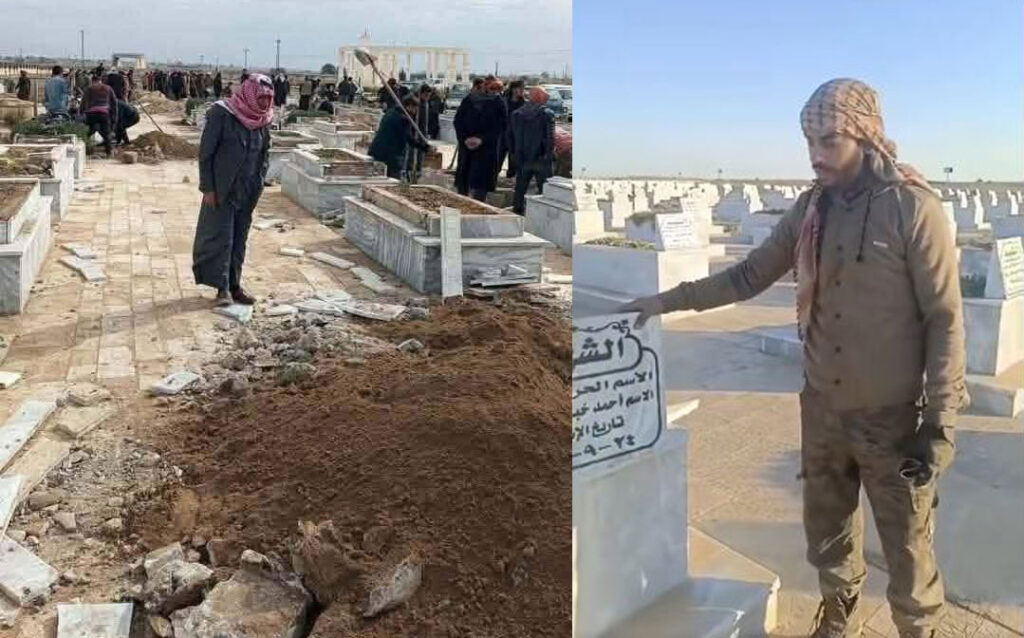
On 21 January 2026, a circulated video showed an individual identified as a member of what is referred to as the “Syrian Arab Army” under the leadership of Hay’at Tahrir al-Sham breaking gravestones belonging to SDF fighters in the town of al-Shaddadi in northern Syria. The footage included derogatory expressions directed at the deceased, including referring to the graves as “pig graves,” accompanied by religious chants.
The recording depicts a direct assault on grave markers, constituting an affront to the dignity of the deceased and a violation of the sanctity of cemeteries. Such conduct is prohibited under customary international humanitarian law, which requires respect for the remains of the dead and prohibits their desecration.
2. The City of Manbij
Between 11 and 13 February 2026, footage circulated showing a number of local residents exhuming graves in a cemetery belonging to SDF fighters in the city of Manbij. The exhumations reportedly followed claims that the land on which the cemetery was established was privately owned and that the owners had demanded its evacuation and the relocation of the remains.
However, local sources indicated that the land is classified as public property belonging to the state rather than private property. The footage further showed a state of disorder during the relocation of remains, with reports that some graves were transferred incorrectly, in the absence of clear official procedures or specialized judicial or medical supervision.
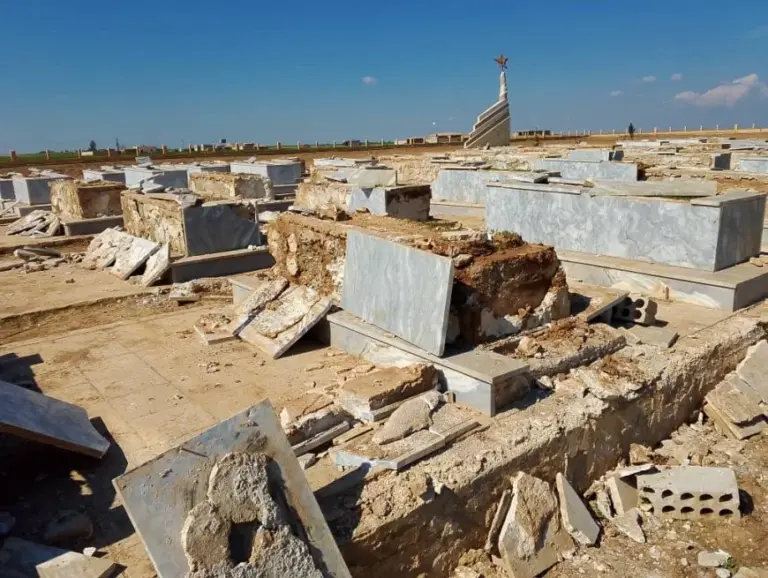
Additional sources reported incidents involving the removal and alleged theft of marble surrounding certain graves, reportedly for resale or reuse, reinforcing concerns of further violations affecting the sanctity of the cemetery.
3. The City of Raqqa
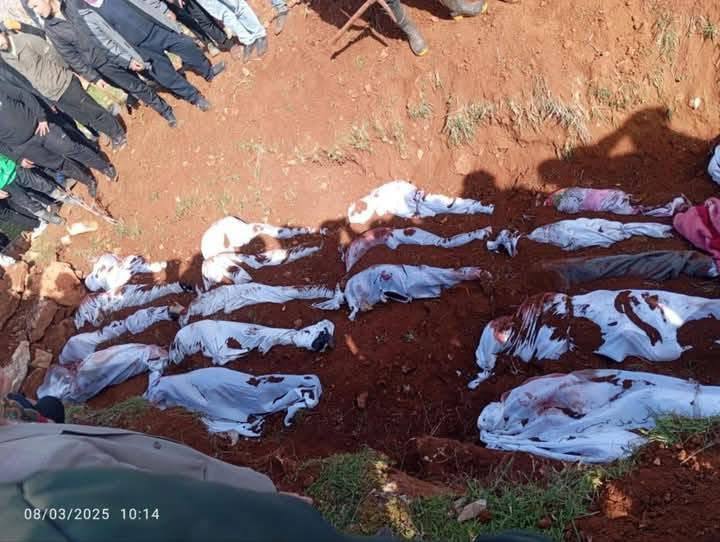
In Raqqa, footage documented in February 2026 showed the relocation of the remains of SDF fighters from two cemeteries located to the east and north of the city, based on similar claims regarding land ownership. Local sources reported that some families of the fighters exhumed and relocated the remains of their relatives themselves, out of fear that the graves would be subjected to attacks or retaliatory acts.
II. Legal Framework
Article 15 of the First Geneva Convention of 1949 requires parties to an armed conflict to take all possible measures to search for the dead, prevent their despoilment or mutilation, and ensure their respectful burial and maintenance of their graves.
Customary international humanitarian law, particularly Rule 113, further affirms the obligation to respect and protect the remains of the deceased and to safeguard them from desecration.
III. Indicators of a Pattern of Targeting
Local sources reported that acts of vandalism and grave relocation were carried out under the direction of the Syrian interim authority represented by Hay’at Tahrir al-Sham, as part of efforts to erase any trace of the Syrian Democratic Forces in areas where control has shifted, including the removal of symbols associated with fighters killed while combating the Islamic State (ISIS).
In this context, on 10 February 2026, the Council of Martyrs’ Families in Kobani issued a statement condemning the attacks on SDF fighters’ graves, describing them as violations of humanitarian values and the sanctity of victims. The Council called on the international community and human rights organizations to document these violations, hold those responsible accountable, and work toward the establishment of an independent international commission of inquiry.
IV. Broader Context of Escalation
These incidents occur amid a military escalation that began on 6 January 2026, when forces of the Syrian interim authority, represented by Hay’at Tahrir al-Sham, launched military operations targeting the predominantly Kurdish neighborhoods of Sheikh Maqsoud and Ashrafiyeh in the city of Aleppo, before taking control of them on 10 January 2026.
Subsequently, operations expanded to areas east of the Euphrates, particularly in Raqqa Governorate and northern Deir ez-Zor countryside, following the alignment of certain Arab tribes with interim government forces. The scope of operations further extended to other Kurdish-majority areas, including the city of Kobani and the countryside of al-Hasakah and al-Qamishli.
Multiple human rights documentations, including by Rights Monitor, indicate that the military campaign from 6 January 2026 through the date of this report has resulted in killings, arrests, and enforced disappearances of Kurdish civilians and fighters, in addition to other violations, including indiscriminate killings, targeting of civilians during displacement, and shelling of residential homes.