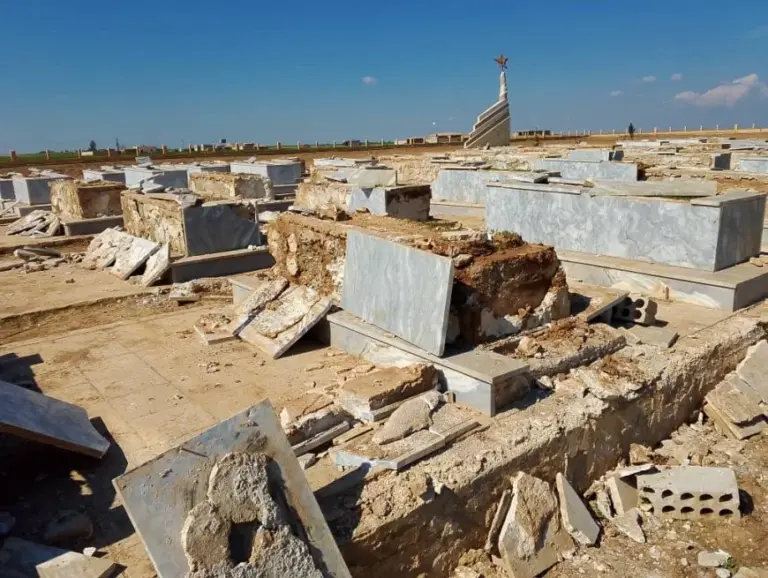
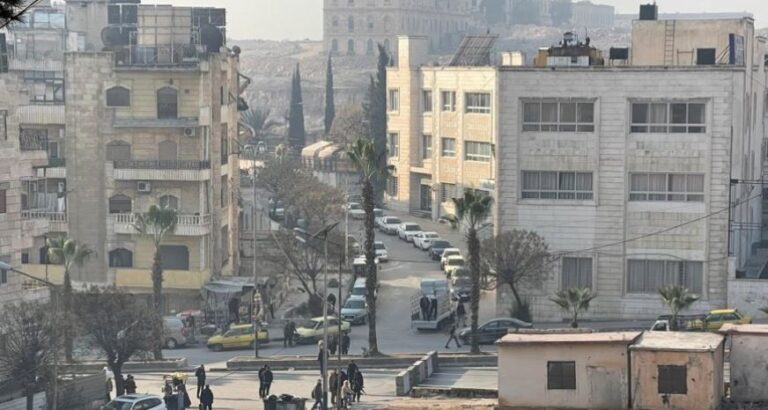
The regions of Northern Syria—specifically Ain Issa, Ras al-Ayn (Serê Kaniyê), and the Kobani countryside—are witnessing an alarming escalation in violations against Kurdish civilians. This occurs within a fragile security environment and the proliferation of hate speech. These documented incidents detail a series of attacks and threats directly targeting the Kurdish presence, amid growing fears of aggravating communal tensions and sliding toward a broader conflict.
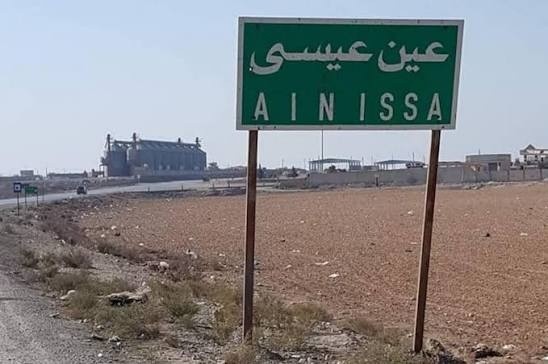
I. Ain Issa: Direct Targeting of Kurdish Residents and Property
Documented reports indicate that Kurdish residents in the town of Ain Issa (Raqqa Governorate) are being subjected to an organized campaign of threats and assaults by tribal militants who have shifted their allegiance to the interim authority in Damascus. These violations include:
Seditious Graffiti: Writing racist slogans on shops belonging to Kurdish citizens, accusing them of being “Qandilists” or “affiliated with the PKK,” which constitutes clear incitement against them.
Economic Restrictions: Imposing informal restrictions preventing Kurds from opening their businesses, coupled with public threats demanding they vacate the town.
Property Destruction: Direct targeting of assets, including the total vandalism of a barbershop and an attack on a clothing store, where the owner was threatened with arson if he did not leave.
Physical Assaults: Recorded attacks in the village of Jahbal (township countryside) resulting in injuries to two individuals.
Armed Harassment: Armed groups linked to Arab tribes loyal to the new Damascus authority attacking Kurdish-owned vehicles and pelting houses with stones and live ammunition.
Data indicates that there are more than 50 Kurdish-owned shops in the town, which is home to over 100 Kurdish families. These violations have already led to the displacement of at least 20 Kurdish families who have opted not to return due to security fears.
These facts point to a pattern of violations involving:
Direct Death Threats
Forced Displacement
Trespassing and Property Damage
Nationalist Incitement and Hate Speech
II. Risks of Escalating Communal Strife
The surge in these violations coincides with the spread of anti-Kurdish hate speech in public gatherings and on social media. This raises serious concerns regarding the eruption of Kurdish-Arab civil strife in the region, given the absence of effective civilian protection mechanisms.
III. Kobani Countryside: Humanitarian Deterioration and Economic Pressure
In the countryside of Kobani (East Aleppo), incidents of assault on Kurdish property have been documented, alongside:
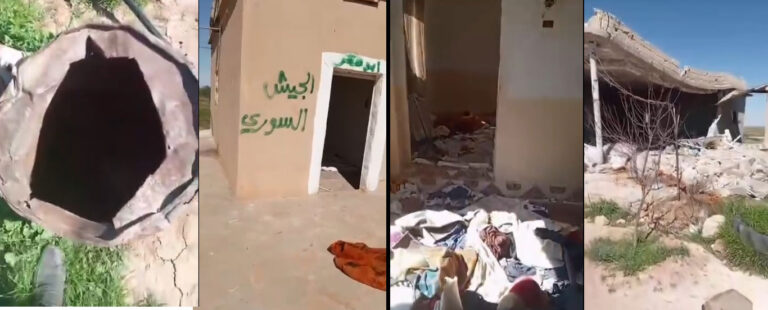
Looting and Destruction: The pillaging and demolition of homes resulting from previous military operations.
Systematic Harassment: Persistent intimidation by militants and certain tribal elements aimed at coercing Kurdish residents to abandon the area.
Distress Sales: Residents being forced to sell their land at undervalued prices due to security and economic pressures in preparation for emigration.
These conditions foster a “push factor” environment for the indigenous population, signaling a gradual demographic change.
IV. Ras al-Ayn (Serê Kaniyê): Insecurity and Ongoing Violations
In the Serê Kaniyê region, security remains precarious due to the presence of armed factions and Turkish military bases:
Most villages have become uninhabitable due to destruction and the total absence of basic services.
Persistent security risks continue to prevent the safe return of residents.
A recent incident was recorded involving individuals identified as (S. A.) and (A. A.), who were harassed upon their return to the city by an individual named “Kh. R.” and a group of militants loyal to the interim authority.
Local actors warn against individual returns, emphasizing that any return must be collective, backed by international guarantees, contingent upon the withdrawal of Turkish forces and armed factions, and accompanied by civilian security forces. Warnings have also been issued regarding surveillance networks and informants monitoring returnees and exposing their data.
Context and Conclusion
These developments are part of a broader context of escalating violations against Kurdish civilians in Northern Syria, particularly following March 21, 2026, coinciding with Newroz celebrations.
The region has undergone a radical transformation since Operation Peace Spring, launched by Turkey on October 9, 2019, with the participation of “Syrian National Army” factions. That operation resulted in the seizure of Ras al-Ayn and Tal Abyad and the displacement of over 200,000 civilians, the majority of whom are Kurds.
Documented evidence indicates a recurring pattern of violations targeting Kurds across multiple regions in Northern Syria, encompassing threats, violence, forced displacement, and economic strangulation. In the absence of a safe environment and the presence of diverse armed actors, the risks to civilians are mounting, necessitating urgent intervention to ensure protection, halt violations, and hold those responsible to account.