The Looting of the Kurdish Village of Bir Nasser in the Countryside of Kobani, Northern Syria: Documentation of the Destruction of Civilian Infrastructure, Flooding of the Water Well, and Graffiti Bearing the Name “The Syrian Army” on Homes
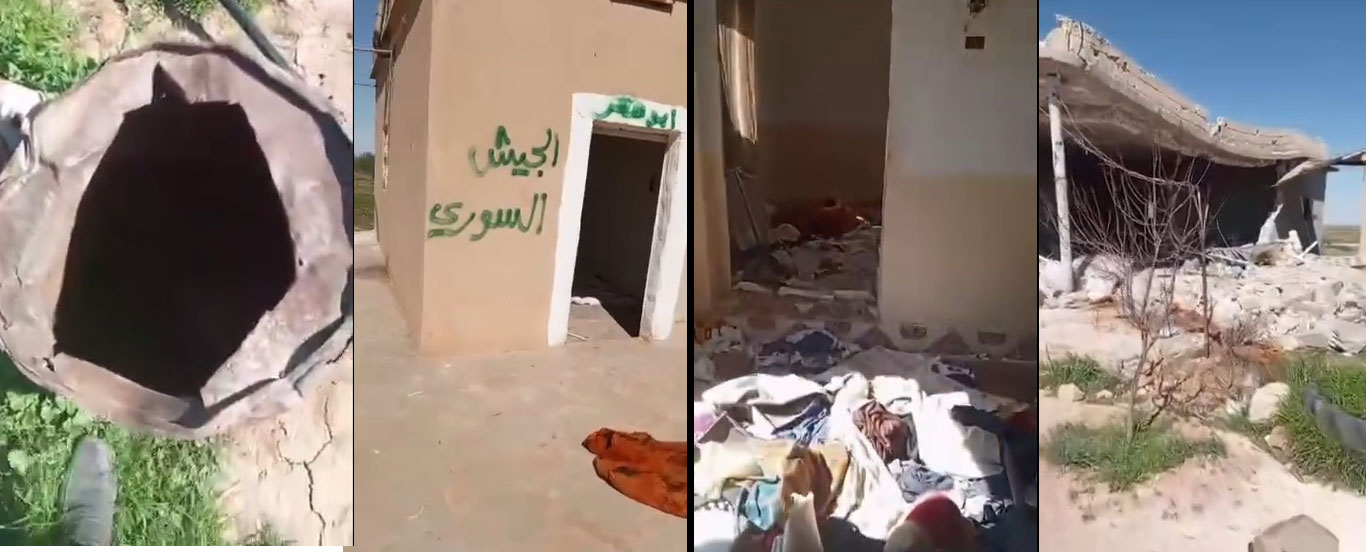
Video footage from the Kurdish village of Bir Nasser in the countryside of the city of Kobani (Ayn al-Arab), northern Syria, documents that the village was subjected to large-scale looting operations and deliberate acts of vandalism targeting private property and civilian infrastructure. These events occurred within the context of a military campaign led by forces referred to as the “Syrian Interim Authority” and armed groups operating under the name “The Syrian Arab Army,” as evidenced by the circulated recordings.
The video clips, which were circulated on 3 March 2026, show several Kurdish residents of Bir Nasser village affirming that their village was subjected to comprehensive looting and deliberate destruction affecting various aspects of civilian life.
According to their statements in the recordings:
The contents of homes were completely looted, including interior doors.
Not a single house in the village was left intact.
The water pump was uprooted from the main well.
The well was deliberately filled with stones, rendering it entirely inoperable.
Solar energy panels were looted.
Even residents’ hay storage facilities were confiscated.
The footage also shows the well with stones intentionally thrown inside it, in addition to extensive destruction affecting a number of houses as a result of shelling. Graffiti bearing the phrase “The Syrian Army” appeared on the walls of some homes.
In recordings made in the Kurdish language, the village residents addressed appeals to the concerned authorities and human rights organizations to examine their tragic situation, affirming the total absence of basic means of life in the village.
These incidents occur within the broader context of military escalation witnessed in predominantly Kurdish areas in northern and eastern Syria at the beginning of 2026.
The military operation launched by the Interim Authority began on 6 January 2026 with the targeting of the Sheikh Maqsoud and Ashrafiyah neighborhoods in the city of Aleppo, before taking control of them on 10 January 2026.
Subsequently, operations expanded to areas east of the Euphrates, particularly in Raqqa Governorate and the northern countryside of Deir ez-Zor, following the alliance of certain Arab tribes with the forces of the “Syrian Interim Authority.” Violations escalated further as operations reached other Kurdish areas, including Kobani, al-Hasakah, and the countryside of al-Qamishli.
In the aftermath of these attacks, the predominantly Kurdish city of Kobani and its countryside were subjected to a tight siege imposed by factions of the “Syrian Interim Authority,” represented by Hay’at Tahrir al-Sham, accompanied by a wave of forced displacement of residents. This was followed by a widespread pattern of looting and pillage affecting villages that had been emptied of their inhabitants.
According to documentation by Kurdish media platforms, the violations were not limited to Bir Nasser village but extended to dozens of villages and towns in the Kobani countryside, including:
Cross-referenced data indicate that the majority of these villages have predominantly Kurdish populations and witnessed widespread displacement of their residents as a result of military operations, followed by the looting of homes and private property. This raises serious concerns regarding a systematic pattern of targeting based on ethnic identity.
These facts underscore the need for an independent and impartial investigation to determine individual and command responsibility for the violations committed against the residents of Bir Nasser village and other Kurdish villages in the Kobani countryside.
The events of 3 March 2026 in Bir Nasser village in the Kobani countryside document a clear example of grave violations affecting Kurdish civilians and their property, within the context of a broader military operation that began in January 2026 and extended to multiple areas in northern and eastern Syria. The protection of civilians, the guarantee of their safe return, and accountability for those responsible for acts of looting and destruction remain an urgent legal and humanitarian priority.