Activities organized by the so-called “Al-Zahabi Campaign for Sharia Hijab” inside several Syrian universities—most notably Damascus University—have triggered a wide wave of controversy, as well as human rights and academic criticism. This comes amid growing fears of rising religious extremism within educational institutions and its impact on individual freedom of choice and the diverse cultural identity of Syrian society, within the context of the political transformations taking place in the country following the rise of an Islamist-oriented authority to power.
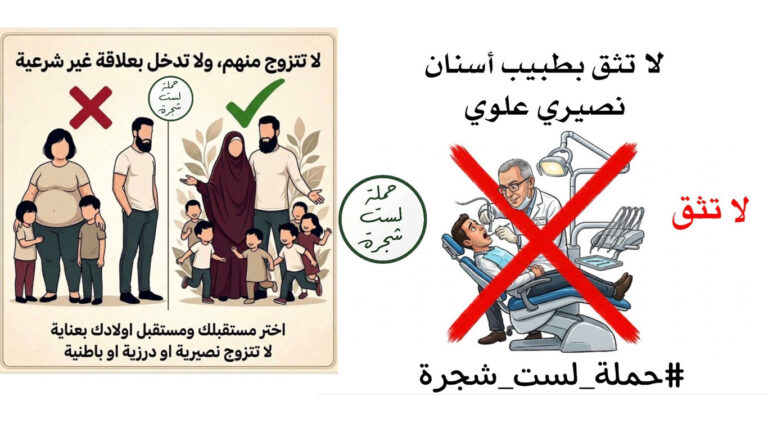
The campaign centers on promoting what it describes as “Sharia dress”—which includes the niqab and full-face covering—through proselytizing events and the free distribution of garments inside Syrian universities. Through its social media accounts, the campaign documented activities held in faculties affiliated with the universities of Damascus, Homs, and Hama, and prior to that, at Aleppo and Lattakia universities.
Damascus University Issues a Statement Regarding On-Campus Activities
Following the circulation of videos and photographs from inside the Faculty of Human Medicine at Damascus University showing campaign events and the distribution of the so-called “Sharia dress” among female students, Damascus University issued an official statement confirming that all activities and events within the university campus are subject to regulatory procedures and prior official approvals.
The university emphasized that no entity, institution, team, or initiative is permitted to organize any activity inside the campus without obtaining the necessary statutory approvals from the university presidency and competent authorities. It deemed any activity held without such approvals a violation of regulations and instructions, exposing its organizers to legal and administrative accountability.
Furthermore, the university asserted its right to take appropriate measures against any entity or individuals conducting activities on campus without completing official coordination and accreditation procedures, stressing the necessity of maintaining the academic environment and ensuring the proper functioning of the educational process.
Conflicting Accounts Regarding Official Approvals
Following the issuance of the university’s statement, the organizer of the campaign, an Egyptian national known as “Hani Dahab” and nicknamed “Sheikh Al-Zahabi,” published a clarification confirming that the campaign had obtained official approval from the administration of Damascus University, and that its activities were conducted in coordination with the administration and in accordance with specific guidelines of which the campaign was notified in advance.
He stated that the campaign complied with instructions regarding photography and other organizational conditions, considering that its activities did not violate the laws or regulations in force within the university.
This divergence in statements reflects a state of ambiguity regarding the nature of the approvals granted to the campaign and the mechanisms through which such activities are permitted inside public educational institutions.
Proselytizing Activities Inside Higher Education Institutions
According to the materials published by the campaign, the events included proselytizing meetings and interventions promoting the wearing of the niqab and khimar as the “original identity” and the “dress of modesty and dignity,” alongside the distribution of garments consisting of multiple pieces, including the abaya, khimar, niqab, gloves, and socks.
Academics and activists argue that introducing activities of a religious, proselytizing nature into universities raises questions about the boundaries of missionary work within public educational institutions, and the extent of its compatibility with the principles of academic neutrality, freedom of belief, and the personal choice of male and female students.
Fears of Impact on Individual Freedoms and Cultural Diversity
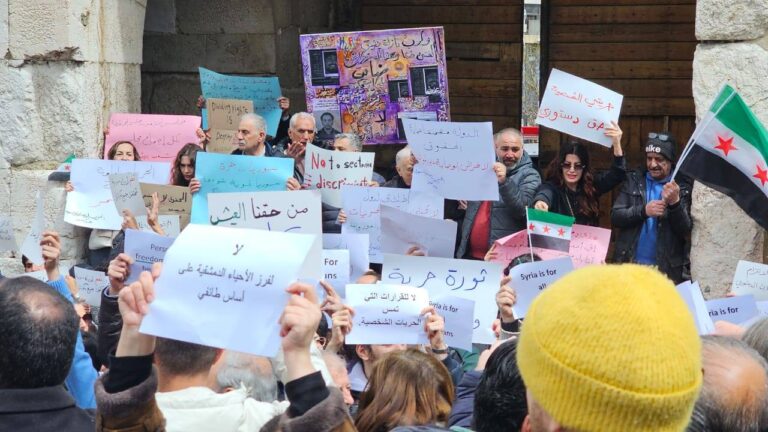
The events sparked widespread reactions on social media platforms and within academic circles. Critics expressed fears that the organized promotion of the niqab inside universities could create social or cultural pressure on female students, potentially affecting their freedom to choose their attire and personal appearance.
Human rights and academic voices also warned of growing religious polarization within educational spaces, maintaining that universities should remain spaces for education, scientific research, and intellectual pluralism, removed from attempts to impose specific behavioral or cultural patterns on students.
These developments highlight growing concerns regarding the future of academic and personal freedoms in Syria, and the potential expansion of conservative religious discourse within educational institutions, which could impact the cultural and intellectual diversity that has long characterized Syrian society.