Al-Tabqa Waqf Committee in Raqqa Issues Warnings to Endowment Shops Prohibiting Music, Cigarettes, and Shisha Amid Fears of Restrictions on Public Freedoms
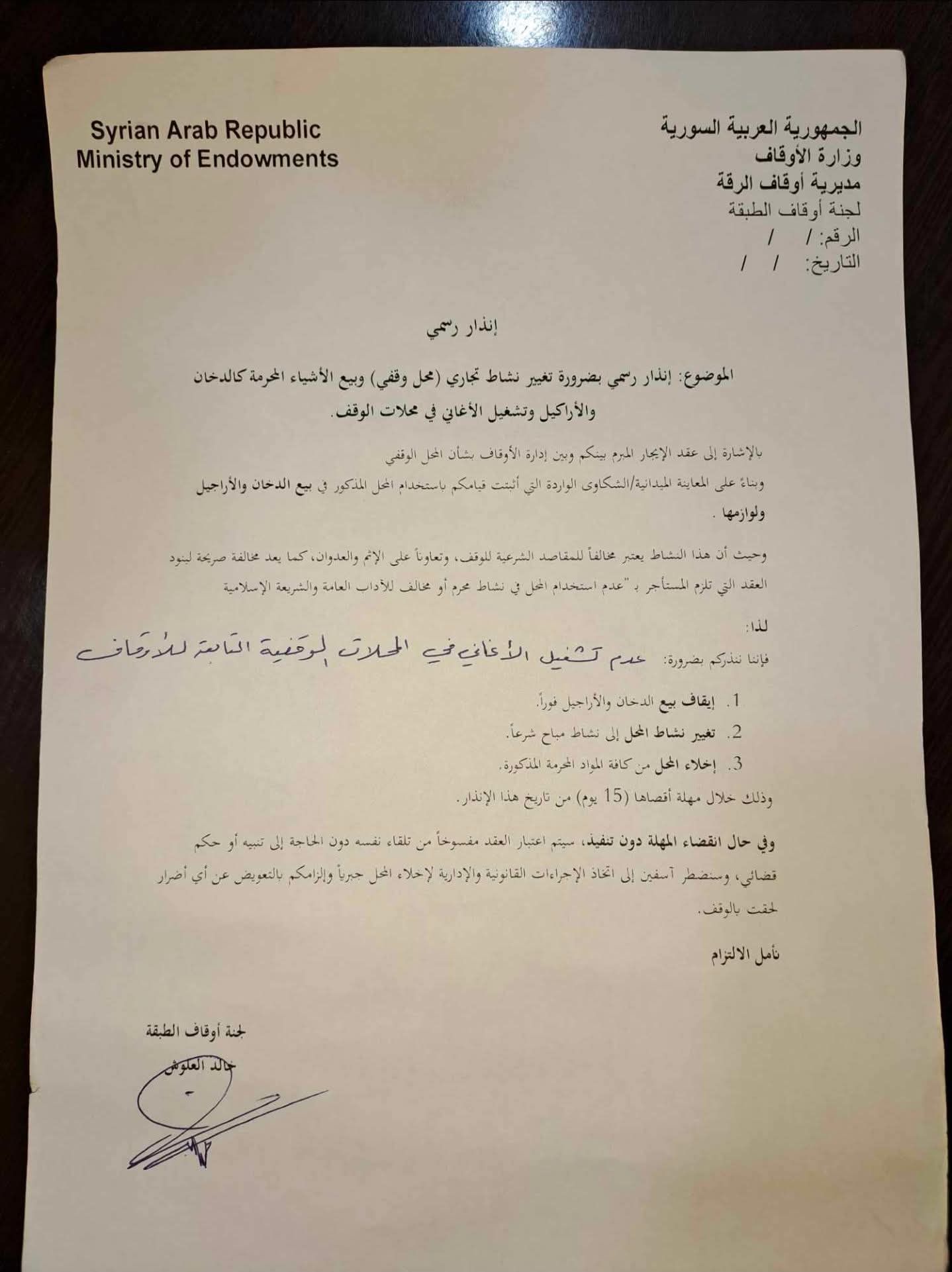
The Al-Tabqa Waqf (Endowments) Committee, affiliated with the Directorate of Awqaf in Raqqa, northern Syria, has issued an official warning prohibiting the playing of music and the sale of cigarettes, tobacco, and shisha (hookah) in shops owned by the Directorate of Awqaf. The warning threatens the termination of lease agreements and forced eviction against violators, sparking criticism and human rights concerns over increasing restrictions on personal and public freedoms in the region.
According to the text of the warning issued by the Al-Tabqa Waqf Committee, the committee addressed an official notice to the lessees of the Waqf properties, based on “field inspections and received complaints,” following the utilization of certain shops for the “sale of tobacco, shisha, and their requisites.”
The text of the warning stated that these activities “are deemed a violation of the Sharia objectives of the Waqf (endowment) and constitute cooperation in sin and aggression.” The committee further considered them a breach of the lease agreement clauses, which stipulate “not utilizing the premises for any prohibited activity or any activity contrary to public morals and Islamic Sharia.”
The warning, signed by the Head of the Al-Tabqa Waqf Committee, Khaled Al-Alloush, contained direct demands to the lessees, which included:
Refraining from playing music in the Waqf shops affiliated with the Awqaf.
Ceasing the sale of tobacco and shisha immediately.
Changing the shop’s business to a “sharia-permissible activity.”
Evacuating the premises of materials classified as “prohibited.”
The committee granted a maximum deadline of 15 days to implement these directives, warning that in the event of non-compliance, “the contract shall be deemed automatically terminated without the need for a prior notice or a judicial ruling,” alongside taking legal and administrative measures for forced eviction and claiming compensation.
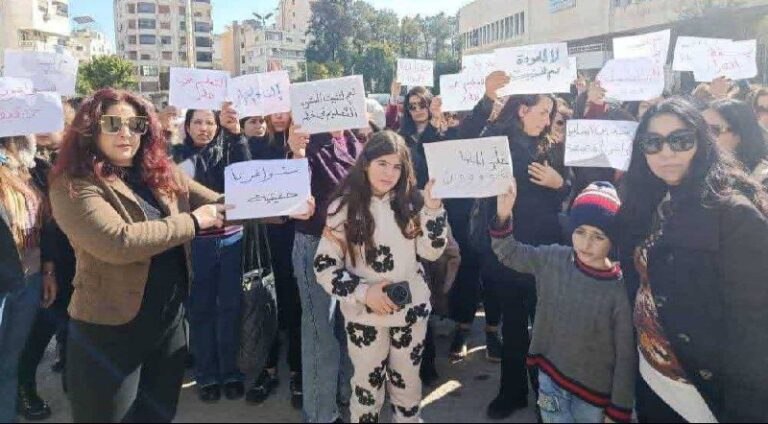
The decision has triggered a state of controversy and resentment among a number of residents in Al-Tabqa city, with some considering it a direct interference in personal and public lifestyles, and a return to censorship policies of a strict religious nature. Some critics also likened these measures to the “Hisbah” (religious policing) practices previously imposed by the “ISIS” organization, particularly regarding the ban on smoking, playing music, and enforcing specific behavioral patterns on shop owners and public facilities.
Activists and citizens circulated criticisms of the decision, considering that the method of dealing with residents and shop owners reflects a tendency to impose social and religious restrictions on the public sphere, especially with the threat of closure and contract termination against violators.
Syria has witnessed similar decisions recently; on March 15, 2026, the Damascus Provincial Council issued a decree prohibiting the serving of alcoholic beverages in restaurants and nightclubs in the city of Damascus. This decision likewise sparked widespread debate and human rights concerns related to restricting personal freedoms and lifestyles.
These measures reflect an escalation in policies restricting public freedoms in Syria, amid fears over the absence of adequate guarantees to respect fundamental rights—including the freedom of individuals to choose their lifestyles and engage in social and cultural activities within legal frameworks—at a time of growing calls to respect pluralism and civil rights, and to refrain from imposing religious or ideological restrictions on society.