Attacks Target Syrians Accused of “Loyalty to the Former Regime” Amid Authority Inaction: Fears of Escalating Violence and the Absence of Transitional Justice in Syria
The Rights Monitor platform has documented, over recent days, an escalation in acts of violence and attacks targeting individuals and property belonging to persons accused of affiliation with what is locally known as the “Shabiha” or loyalists to the former Syrian regime across several Syrian regions. This comes amid accusations against the interim authorities of failing to take effective measures to prevent violations or prosecute those responsible.
This developments occur within the context of an escalating campaign led by supporters of the interim authority via social media platforms and in certain public gatherings, calling for the accountability of those they describe as “Shabiha,” amid human rights concerns that these calls could transform into extrajudicial retaliatory practices.
According to circulated video footage and information, the evening of Monday, June 15, 2026, witnessed gatherings in a number of Syrian regions. Participants demanded the expulsion of individuals accused of “Tashbih” (acting as Shabiha) or involvement in prior violations during the rule of former Syrian President Bashar al-Assad.
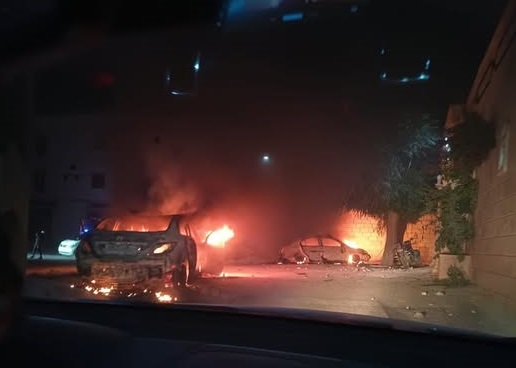
Furthermore, video clips showed the burning of vehicles belonging to individuals described as “Shabiha” in the town of Taybat al-Imam in the Hama countryside.
According to available information, several areas experienced acts of chaos or assaults on property and individuals described as loyalists to the former regime, including areas in the Homs countryside, Idlib countryside, Hama countryside, the city of Palmyra, and Daraa Governorate.
In another development, the city of Damascus witnessed on the evening of June 15, 2026, an unlicensed demonstration in the vicinity of the Ish al-Warwar area—a predominantly Alawite neighborhood—during which sectarian slogans were raised, including derogatory remarks against members of the Alawite community, as shown in circulated footage and local testimonies.
Local sources reported that personnel from the Public Security forces were present in the vicinity of the demonstration; however, the gathering was not dispersed, and none of the participants were detained, despite the lack of an official permit.
The incident has raised questions regarding the implementation mechanism of the new demonstration law, amid allegations of double standards in dealing with public assemblies. Opposing protests against economic conditions had previously been banned or dispersed under the pretext of lacking a permit, whereas no similar measures were taken against demonstrations that included slogans of a sectarian nature.
Escalation of Incitement and Hate Speech
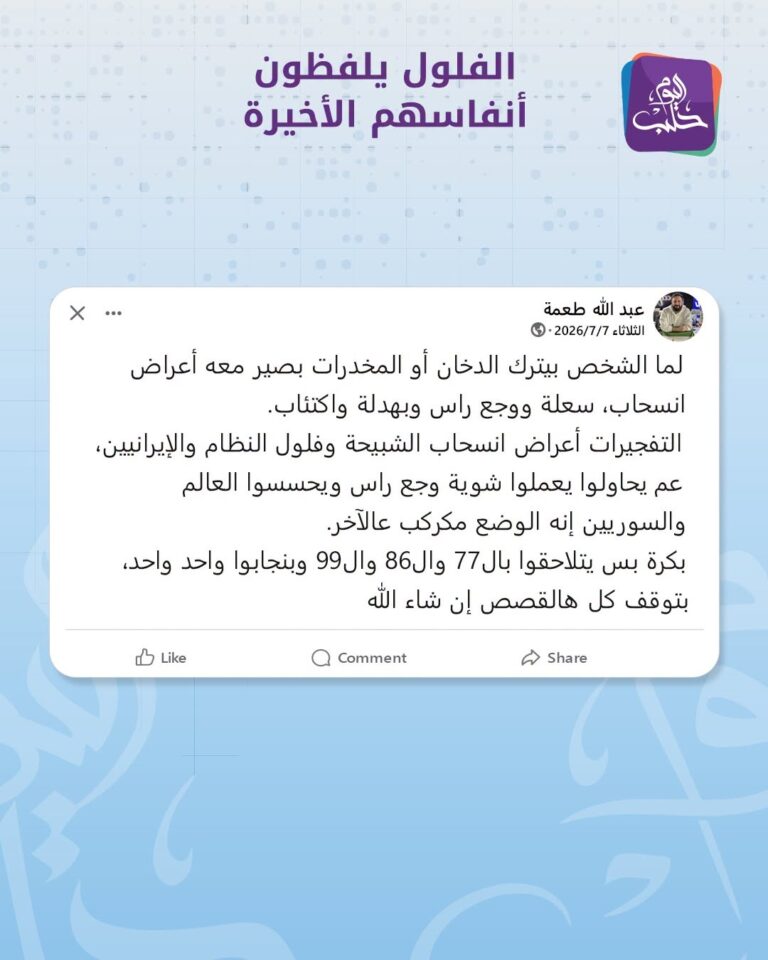
This was accompanied by a widespread proliferation of incendiary content across social media platforms, which included the publication of personal photos and information of individuals accused of loyalty to the former regime, alongside calls to hunt them down or expel them from their areas.
Furthermore, posts were circulated in Latakia Governorate containing threats directed at individuals described as “Shabiha,” calling on them to leave their regions, which raises additional concerns regarding the escalation of hate speech and incitement to violence.
The Rights Monitor Syria platform believes that the growing online incitement contributes to creating an environment that encourages extrajudicial acts of retaliation and increases the likelihood of gross violations being committed against the targeted individuals.
Footage circulated on social media platforms on June 14, 2026, had shown worrying indicators of escalating security chaos in the towns of Kafr Takharim and Kafr Owayd in the Idlib countryside, northern Syria.
Local reports indicated that similar incidents occurred in other areas, targeting individuals described as “Shabiha” following online incitement and treason-branding campaigns, which has heightened growing fears regarding the spread of vigilantism and extrajudicial violence.
Legal Concerns and Institutional Challenges
These developments raise increasing human rights concerns over the widening circle of civil violence in the absence of clear pathways for transitional justice and legal accountability, and the continued execution of what resembles collective or individual punishments outside the framework of the judiciary.
Fears are also growing over the falling of more victims given the difficulty of independently documenting violations due to the state of political and security polarization, the absence of an environment that allows for the full disclosure of facts and victims, and the limited access to information in certain regions.
The Rights Monitor Syria platform warns that turning political accusations or past affiliations into a justification for targeting individuals or their property would undermine the rule of law and deepen societal divisions, particularly in light of the growth of hate speech and sectarian incitement.
The fundamental principles of international human rights law affirm that the right to life and a fair trial are guaranteed rights for all persons without discrimination, and that any accusations of committing violations or crimes must be subject to independent and fair judicial proceedings that guarantee the rights of victims and defendants alike.
Furthermore, extrajudicial killings, torture, retaliatory assaults, and incitement to violence or hatred constitute gross violations that warrant investigation and accountability, regardless of the political affiliations or social backgrounds of the targeted individuals.
Rights Monitor warns that the continuation of these practices with impunity may exacerbate societal tensions and widen the cycle of vendetta and violence, thereby threatening civil peace and undermining opportunities for achieving justice and stability in Syria.