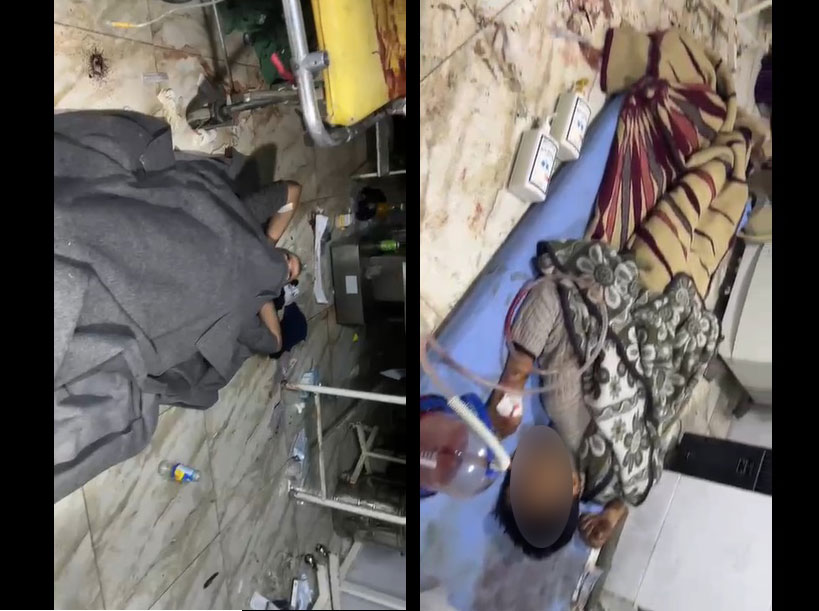
Documented footage dated 9 January 2026 from inside “Khaled Fajr” Hospital in the Sheikh Maqsoud neighborhood of Aleppo city showed extremely dire humanitarian conditions, with wounded individuals seen lying on the ground due to the hospital being overwhelmed with injured people. This came in the aftermath of weapons shelling carried out by the forces of the interim authority against Kurdish neighborhoods in the city of Aleppo, northern Syria.
According to the available information, “Khaled Fajr” Hospital went out of service on 8 January 2026 after being subjected to repeated shelling that led to its complete shutdown and inability to provide medical services. Video footage recorded on the same day shows the hospital being directly targeted as part of violent attacks that struck the Sheikh Maqsoud and Ashrafieh neighborhoods.
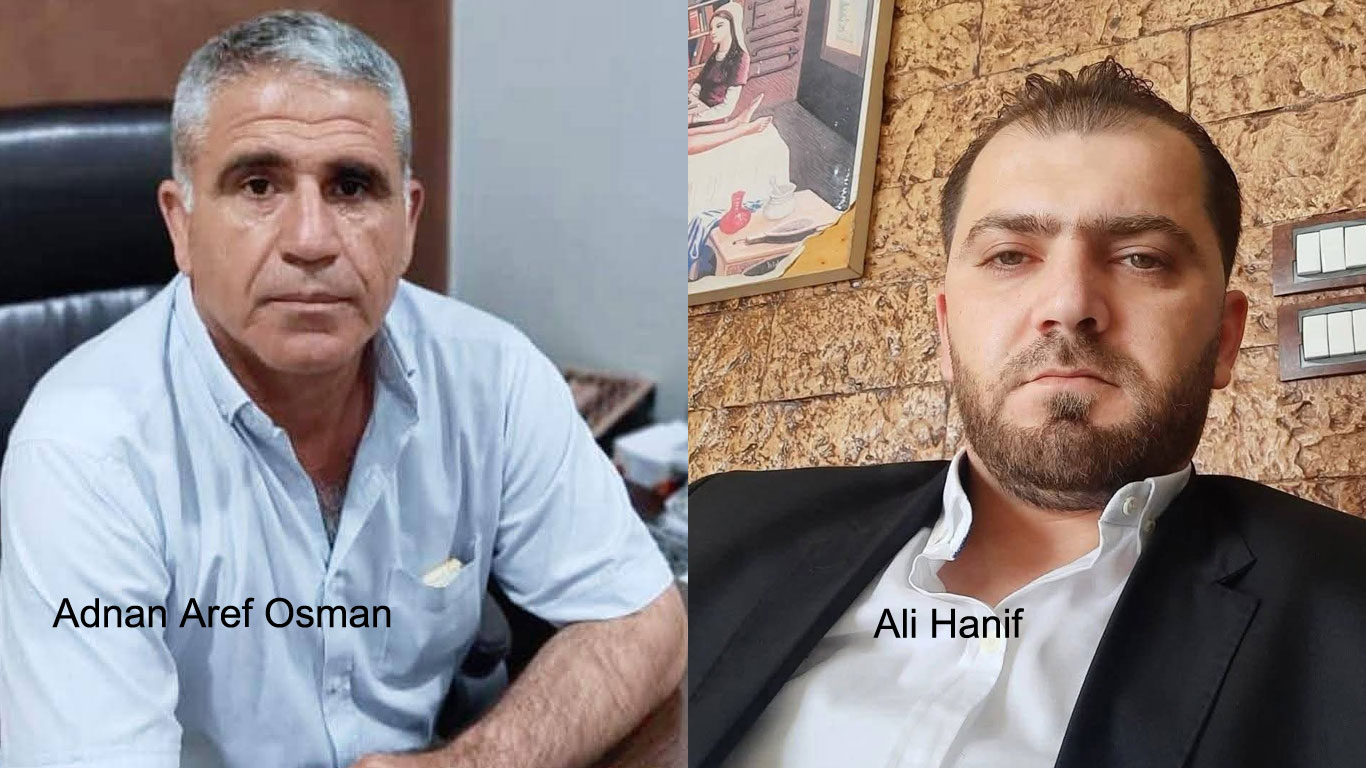
On the evening of Thursday, 8 January 2026, a group of gunmen affiliated with the interim authority forces “Hayat Tahrir al-Sham” carried out the execution of two Kurdish civilians working as part of the medical staff at Osman Hospital in the Ashrafieh neighborhood of Aleppo city. According to the available data, armed men entered the hospital, tied up the two victims, and then summarily executed them by gunfire inside the medical facility, leading to their immediate death. Testimonies indicate that the execution took place during the early morning hours.
The two victims are Adnan Arif Osman, the brother of the director of Osman Hospital, and Ali Hanif. They hail from the village of Ain al-Hajar Saghir in the Afrin countryside. The victims belong to the Kurdish component and were working in the health sector inside the hospital.
The violent shelling that targeted the Sheikh Maqsoud and Ashrafieh neighborhoods resulted in deaths and injuries in areas inhabited predominantly by residents belonging to the Kurdish component. These incidents come in the context of a military escalation that included the targeting of residential neighborhoods and medical facilities, leading to a serious deterioration in humanitarian conditions and health services in the area.