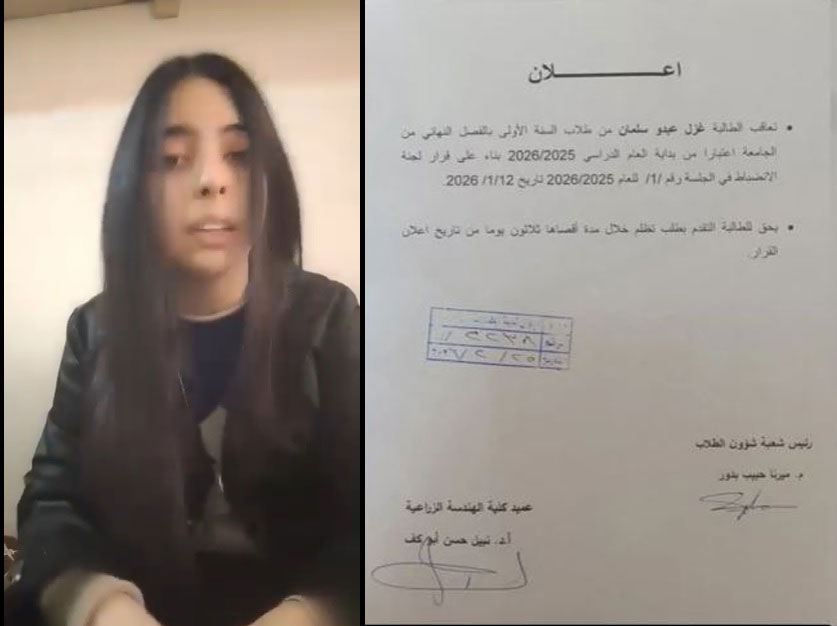
On 25 February 2026, Latakia University issued a decision ordering the permanent expulsion of student Ghazal Abdo Salman, 19 years old and belonging to the Alawite sect, following her referral to investigation over a social media post in which she commemorated what are referred to as the “March Massacres” against members of the Alawite community. The decision was issued in the context of an online campaign of incitement and threats targeting the student across social media platforms, as documented.
According to available information, Ghazal Abdo Salman is enrolled in the Faculty of Agricultural Engineering at Latakia University (formerly known as Tishreen University). She was summoned for questioning after publishing content on her personal accounts addressing the March events, which she described as massacres targeting Alawites.
In a video clip posted by the student on social media, she confirmed the issuance of a final expulsion decision and her deprivation of the right to continue her university education, indicating that the disciplinary measure was imposed due to the aforementioned commemorative post.
For their part, accounts on social media platforms identifying themselves as supporters of the interim authority circulated narratives claiming that the expulsion decision was based on an audio recording described as containing sectarian speech, in addition to posts and video clips attributed to the student.
An online incitement campaign targeting the student was also documented following the spread of news of her expulsion. The campaign included threats and hate speech, as well as the publication of her photographs in a degrading manner, including the circulation of images on accounts associated with what has been referred to as a so-called “Sabayā Market.”
According to circulated information, the expulsion decision was issued by the Dean of the Faculty, Dr. Nabil Hassan, without a detailed official clarification from the university administration setting out the legal grounds for the decision or publicly specifying the nature of the alleged disciplinary violation.
The decision of permanent expulsion and deprivation of education, if found to be linked to expressive content, raises serious questions regarding respect for the right to freedom of opinion and expression and the right to education, as guaranteed under international human rights standards, particularly in contexts intersecting with religious or sectarian affiliation.
Moreover, the incitement and threats directed at the student, if not pursued or curtailed, may constitute a failure to uphold the duty to protect individuals from hate speech and incitement to violence, and from the resulting risks to their physical and psychological safety.
This case calls for an independent and transparent investigation to ensure clarity regarding the disciplinary measures taken, to safeguard the student’s fundamental rights, and to prevent any targeting based on sectarian affiliation or the peaceful exercise of freedom of expression.