Rights Monitor Syria Condemns Attacks on Kurdish Families Returning to Tell Abyad, Calls for an Independent Investigation, Accountability for Those Responsible, and Guarantees for Safe Return of Displaced Persons
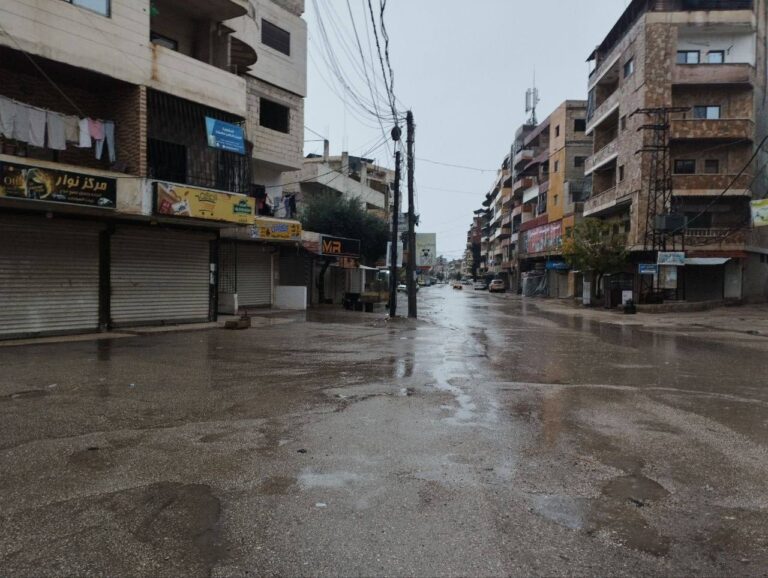
Rights Monitor Syria strongly condemns the attacks targeting displaced Kurdish families who returned to the city of Tell Abyad (Girê Spî) and its countryside on Monday, October 26, 2026, after nearly seven years of displacement, in an attempt to reclaim their homes and lands and return to their original areas. Incoming information and video footage documenting the incident indicate that civilians, including women and children, were subjected to physical assault, death threats, destruction of property, and the burning of vehicles, alongside the chanting of offensive and racist slurs targeting Kurds and their national identity.
The Monitor expresses its deep concern over what the returning families were subjected to, particularly as a number of displaced persons had headed to the Tell Abyad District Administration building to submit official legal documents proving their ownership of the homes and lands in preparation for reclaiming them and returning thereto, before being attacked. Information also indicates that more than one hundred Kurdish families were trapped inside the District Directorate building before the Internal Security Forces in the Ayn al-Arab/Kobanî region evacuated them later that evening.
The Monitor considers that targeting civilians based on their national identity, threatening or insulting them, or attacking their property while attempting to return to their homes constitutes a matter of extreme gravity, raising serious concerns regarding respect for the fundamental rights of displaced persons and protection guarantees, as well as its repercussions on civil peace and coexistence among the components of Syrian society.
First: The Rights and Legal Framework of the Incident
Rights Monitor Syria affirms that the right to return to one’s country and original places of residence, the protection of property, equality before the law, personal integrity, and human dignity are non-derogable rights that must not be impaired on the basis of national, ethnic, or any perceived political affiliation.
In this context, the Monitor emphasizes that the safe, voluntary, and dignified return of displaced persons must take place without coercion, threats, or discrimination, and must be accompanied by effective guarantees to protect returnees and their property, as well as the removal of unlawful obstacles preventing the restoration of their rights.
These principles are grounded in the provisions of international human rights law, particularly Article 2 of the Universal Declaration of Human Rights regarding non-discrimination, Article 7 regarding equality before the law, and Article 17 regarding the right to property.
Furthermore, the Monitor recalls that the prohibition of racial discrimination and incitement to hatred and violence, as well as the protection of civilians from attacks, obligates the relevant authorities to adopt serious measures to prevent violations, investigate them, and hold those responsible accountable in accordance with applicable legal obligations.
With respect to international humanitarian law, the Monitor stresses the necessity of adhering to the relevant rules concerning the protection of civilians and property, as well as the prohibition of attacks against persons taking no active part in hostilities, whenever the rules of this body of law apply to the facts and legal context of the conflict. It also emphasizes that forced displacement and violations of the rights of displaced persons require redress in accordance with applicable legal rules, taking into account the circumstances leading to displacement and its nature.
Second: Responsibility of Authorities and Relevant Entities
Rights Monitor Syria stresses that the responsibility to protect civilians rests upon the authorities and entities exercising effective control and possessing the capacity to prevent and respond to attacks, each within the limits of its powers and legal obligations. Accordingly, the occurrence of attacks during the return of families, and in the vicinity of an administrative facility where procedures for submitting property ownership documents were being completed, warrants clarification of the circumstances of the incident, verification of the security measures taken prior to and during the return, and identification of potential failures and the resulting responsibilities.
The Monitor holds the competent governmental, administrative, and security authorities responsible for taking the necessary measures to protect affected families, ensure their safety, prevent the recurrence of attacks, and investigate any negligence or failure in performing protection duties, without prejudging the results of the investigation or asserting the liability of specific individuals or entities prior to verifying the evidence.
The Monitor also stresses that allegations regarding the affiliation of certain families to the Syrian Democratic Forces (SDF), if any, do not in themselves constitute a justification for targeting their members or depriving them of their civil and property rights. Civilians must not be held responsible for perceived political or military affiliations of other individuals, nor may such allegations be used as a pretext for discrimination, threats, or obstructing return.
The Monitor further asserts that combating hate speech and racist incitement is a primary responsibility of the competent authorities, and that dealing with security tensions must be conducted in a manner that safeguards the rights of affected persons and prevents collective punishment, without covering up violations or diluting responsibilities.
In light of the above, the Monitor demands the following:
Initiate an independent, impartial, and transparent investigation into the attacks that occurred in Tell Abyad/Girê Spî and its countryside on October 26, 2026, to uncover their circumstances and identify the perpetrators, instigators, and any entities proven to be involved or negligent.
Hold all individuals responsible for violations accountable in accordance with the law, ensuring that those involved do not enjoy impunity, regardless of their positions or affiliations, while respecting fair trial guarantees.
Provide immediate protection to returning families, particularly women, children, the elderly, and vulnerable groups, ensuring their personal safety and preventing them from being subjected to threats, attacks, or intimidation.
Guarantee the right of displaced persons to voluntary, safe, and dignified return to their homes and lands, free from national, ethnic, or political discrimination, and provide clear security and administrative guarantees to prevent the recurrence of attacks or the obstruction of return.
Protect private property and safeguard ownership rights, expedite the processing of documentation and legal proofs submitted by families in accordance with fair and transparent legal procedures, and ensure that homes and lands are not arbitrarily seized or their owners prevented from reclaiming them.
Ensure families have access to effective remedies, including the filing of complaints, obtaining legal protection, documenting damage to persons and property, and guaranteeing compensation and redress for affected persons in accordance with the law.
Take serious measures to confront hate speech and racist incitement against Kurds and all other Syrian components, hold accountable those responsible for acts that constitute criminal offenses or legal violations, while protecting legitimate freedom of expression and ensuring it is not used to justify incitement to violence.
Clarify the measures taken by the competent authorities to secure the return of the families, investigate potential shortcomings, and publish the results of the investigation and actions taken to an extent that preserves the safety of victims and witnesses and the necessary confidentiality of information.
Establish a coordination and follow-up mechanism for the return of displaced persons from Tell Abyad/Girê Spî, with the participation of competent administrative and security authorities and entities concerned with the rights of displaced persons, to ensure that the demands of returnees are addressed, their property is protected, and violations suffered during the years of displacement are followed up.
Ensure non-recurrence of violations by establishing clear arrangements to protect returnees, monitoring the implementation of security and rights-based guarantees, and addressing the root causes of tension in a manner that safeguards the rights of victims and preserves civil peace.
Rights Monitor Syria affirms that the return of displaced persons to their homes and lands is not a favor granted by any party, but an inherent right that must be respected and guaranteed to be exercised safely, voluntarily, and with dignity. Furthermore, the restoration of rights must not be turned into an occasion for threats, assault, humiliation, or national discrimination.
The Monitor warns that the continuation of attacks on returning families, coupled with the escalation of racist and inflammatory speech, would undermine trust among the components of Syrian society, deepen the impacts of displacement, and threaten opportunities for stability and civil peace. It stresses that genuine de-escalation is not achieved by ignoring violations or asking victims to remain silent, but by establishing justice, protecting affected persons, holding those responsible accountable, and ensuring that what happened is not repeated.
The Monitor reiterates its solidarity with the displaced Kurdish families returning to Tell Abyad/Girê Spî and its countryside, and calls upon the Syrian Interim Authorities and relevant administrative and security entities to assume their legal responsibilities and take immediate, practical steps to guarantee the safety of returnees, safeguard their rights and property, and ensure their safe and dignified return without discrimination or threats.