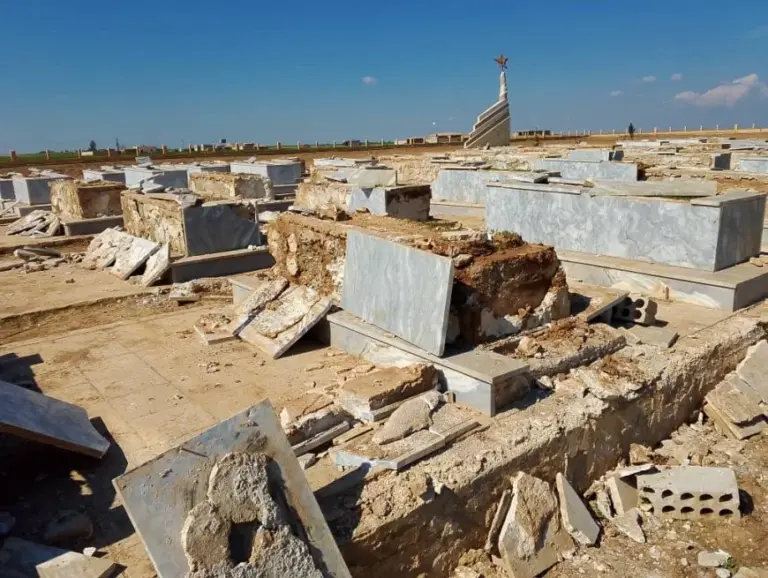
Vandalism of the al-Hazmiya Village Cemetery of Members of the Shiite Sect in the Northern Homs Countryside: A Violation of the Sanctity of the Dead and Freedom of Belief
The village of al-Hazmiya, located in the northern countryside of Homs Governorate, witnessed an incident of vandalism targeting a cemetery belonging to members of the Shiite sect, within an area known for having a population majority from the same sect.
Unknown groups carried out acts of smashing and breaking tombstones and exhuming some graves inside the al-Hazmiya village cemetery, in a direct assault on the sanctity of the dead and cemeteries. Video clips circulated on 16 December 2025 showed destroyed graves and shattered headstones, sparking a wave of widespread public anger and condemnation, as what occurred was considered a flagrant violation of human dignity and the sanctity associated with death and burial rituals.
This attack targeted a cemetery belonging to members of the Shiite sect, placing the incident within the framework of violations with a sectarian and religious dimension, and rendering the victims a specific religious group whose symbols and sanctities are violated after death.
The acts of vandalism were attributed to takfiri groups linked to the interim authority “Hay’at Tahrir al-Sham,” without confirmed information regarding the identity of the individuals who carried out the acts.
The attack also occurred in a context of sectarian tensions and is viewed as an act aimed at inciting discord and spreading religious hatred, by targeting cemeteries as symbols of a community’s identity and its religious and social memory.
This incident comes within a recurring pattern of violations affecting religious minorities in Syria, particularly following Hay’at Tahrir al-Sham’s assumption of power in the country, accompanied by the spread of ideas that excommunicate other sects and legitimize assaults on their symbols and sanctities. This context reflects an alarming environment in which attacks on various religious components are increasing, including violations of the sanctity of their dead.
Under international instruments, the vandalism of cemeteries and the exhumation of graves constitutes a direct violation of freedom of religious belief, an assault on human dignity after death, and a breach of international obligations related to the protection of the dead and the preservation of burial sites—especially when the attack targets the cemeteries of a specific religious group, placing it within the framework of discrimination and religious hate crimes prohibited internationally.