Under the Slogan “I Am Not a Tree”: An Incitement and Boycott Campaign Targets Alawites and Druze in Syria, Raising Fears of Escalating Discrimination and Hate Speech
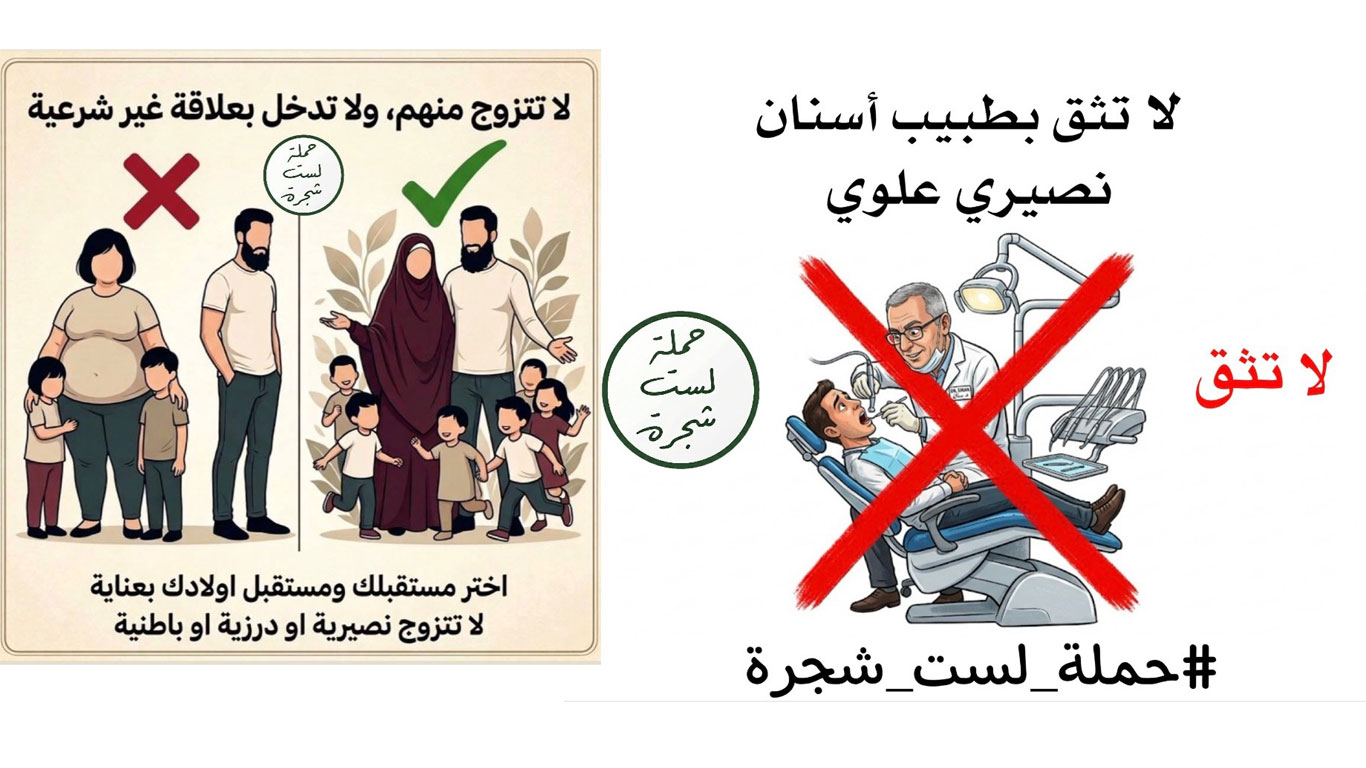
The Rights Monitor Syria platform has observed over recent days the escalation of an online campaign bearing the slogan “I Am Not a Tree.” The campaign included calls for economic and social boycotts, as well as community isolation, against individuals belonging to the Alawite and Druze communities in Syria, by urging abstention from commercial and social dealings with them. This comes in a context that raises serious concerns regarding the growth of hate speech and discrimination based on religious and sectarian affiliation, and the subsequent threat it poses to civil peace and social coexistence.
According to what has been circulated on social media platforms, the campaign called for boycotting individuals, institutions, companies, and products associated with members of the Alawite community, and published lists of targeted institutions and products. It also included calls to restrict social relations and daily interactions with individuals from this community, under pretexts linked to holding accountable what some posts describe as “remnants of the former regime.”
The circulated materials demonstrated that the campaign adopted a unified hashtag and a similar visual identity across a number of accounts and pages on social media platforms, including Facebook, X (formerly Twitter), and Telegram, which lent it an organized character that transcends scattered individual posts.
The escalation of the campaign followed renewed public and media engagement with the case of Dr. Rania Al-Abbasi and her family members, after the disclosure of information regarding their fate, amid an atmosphere characterized by anger and shock among broad segments of Syrians.
The campaign has sparked widespread controversy within Syrian circles, with media professionals and human rights defenders describing it as sectarian and incitive in nature, involving discriminatory practices and hate speech targeting a specific group on the basis of religious and sectarian affiliation.
On June 1, 2026, the Western Syria Alliance (WSA) issued a statement expressing its condemnation of the incitement and boycott campaigns directed against Alawites in Syria.
The Alliance considered that the campaign had crossed the boundaries of traditional sectarian rhetoric to transform into organized calls for social and economic boycotts, including abstention from buying, selling, dealing, communicating, and intermarrying with members of the Alawite community. It warned that the continuation of these calls could contribute to entrenching an environment that permits further discrimination and exclusion.
The Alliance also called upon the United States, the European Union, Canada, the United Kingdom, and all other democratic states to exert pressure on the authorities in charge in Damascus to take effective measures to counter hate speech and sectarian incitement, ensure the protection of religious and ethnic minorities, and hold those inciting discrimination accountable.
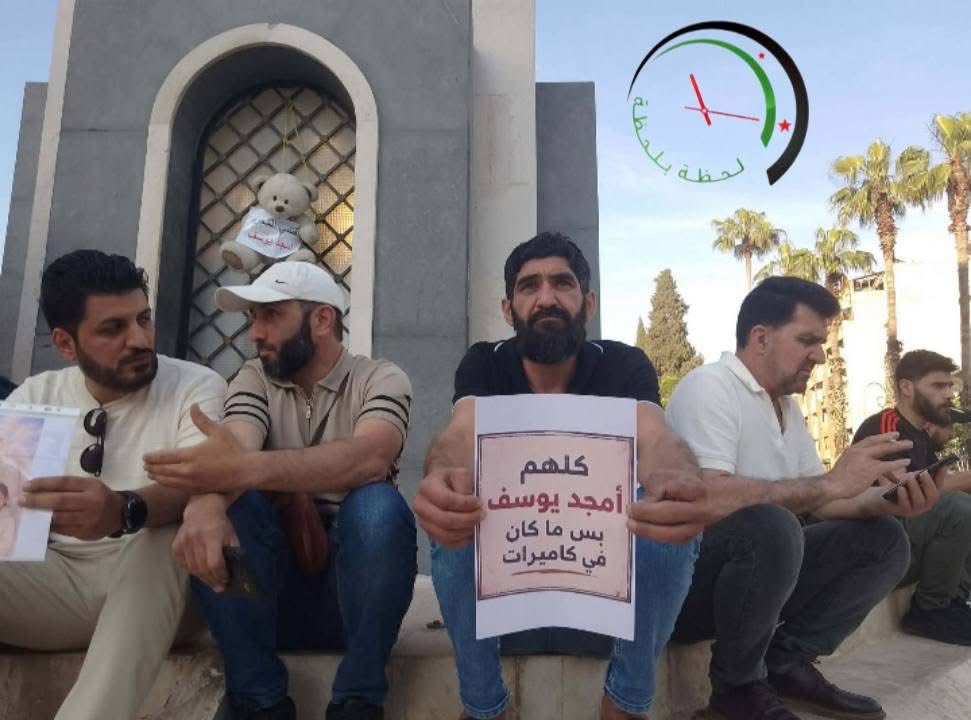
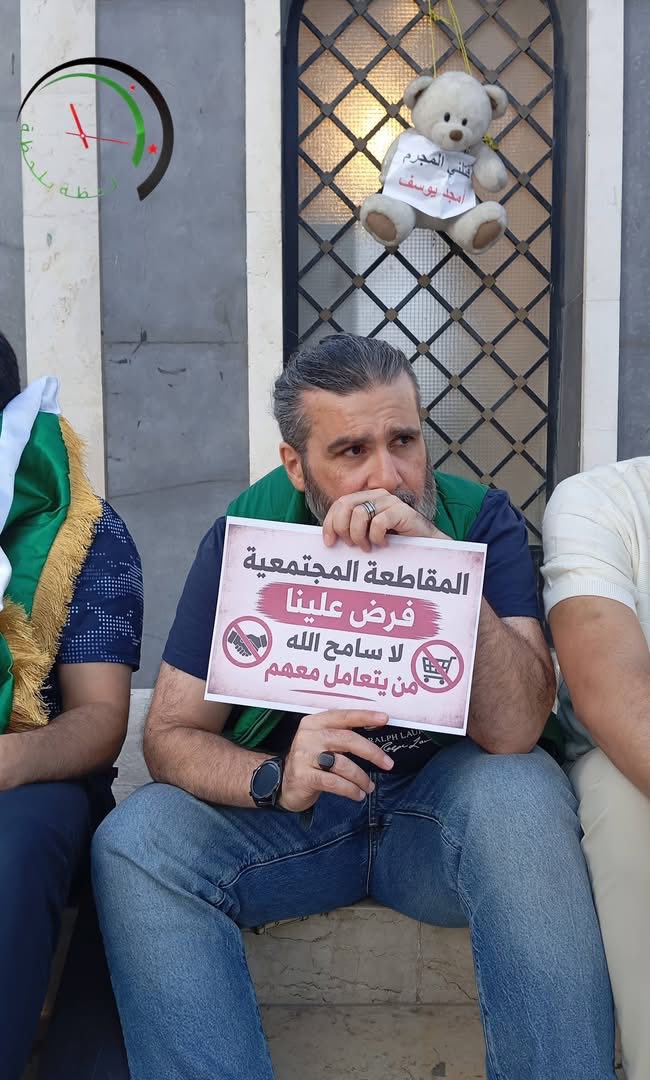
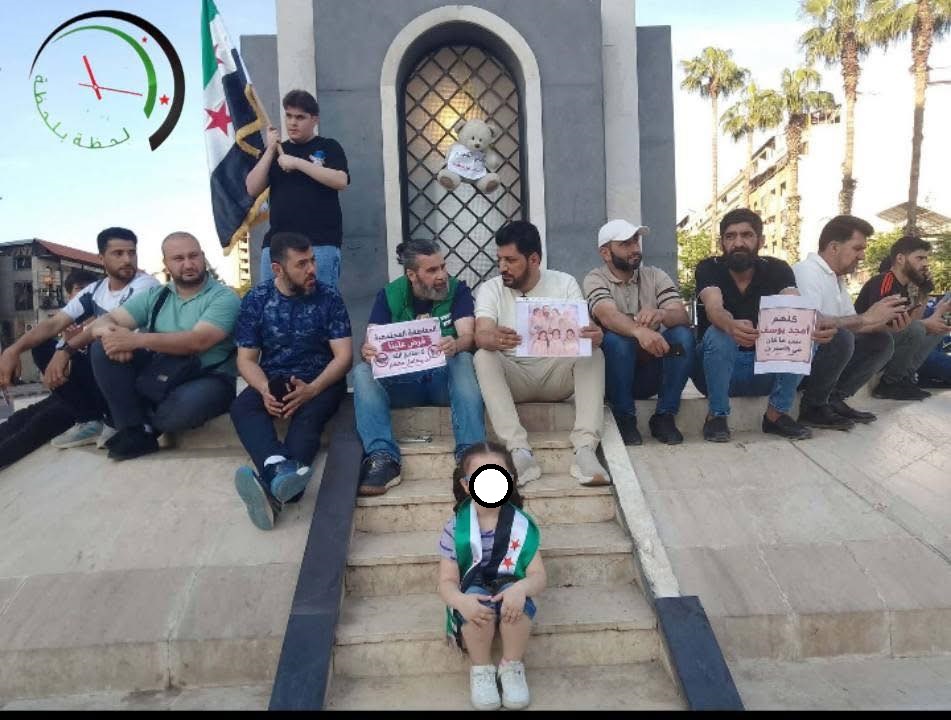
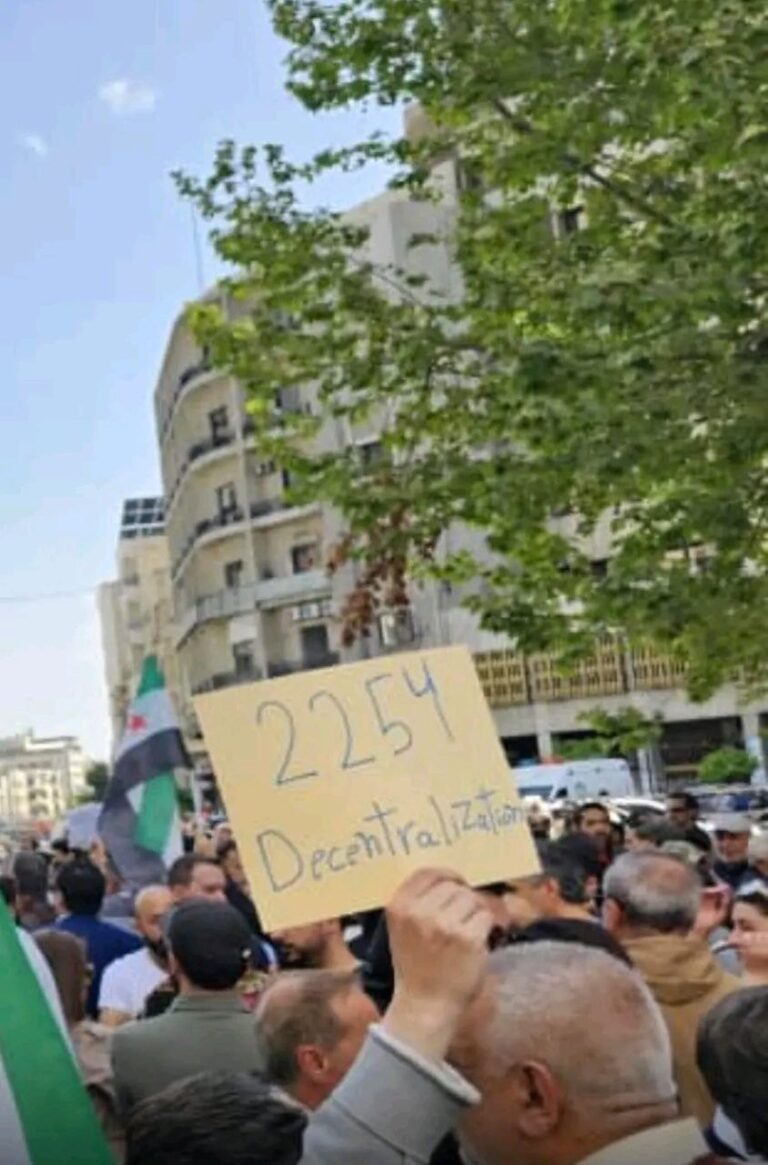
In a related context, the city of Homs witnessed a solidarity vigil with the family of Dr. Rania Al-Abbasi, during which slogans of a sectarian nature were raised, including calls for what participants described as a “societal boycott” of the Alawite community, according to video materials and posts circulated on social media.
Calls for boycott, as well as social and economic isolation based on religious or sectarian affiliation, raise serious human rights concerns given their involvement in collective discrimination and hate speech that may contribute to deepening societal divisions and undermining the principles of equality and non-discrimination.
International human rights standards emphasize the necessity of protecting individuals and groups from incitement to hatred and discrimination, and ensuring that entire groups are not held responsible for the actions of specific individuals or entities. They further stress that legal accountability must be based on individual responsibility and respect for the guarantees of justice and the rule of law.
The Rights Monitor Syria platform warns that the continuation of such campaigns without accountability or legal deterrence may lead to the normalization of the discourse of exclusion and discrimination, thereby threatening the prospects of coexistence and civil peace in Syria and increasing the risks of societal division on religious and sectarian grounds.