Testimony of German Journalist Eva-Maria Michelmann Documents Cases of Incommunicado Detention, Torture, and Transfers Across Multiple Detention Centers in Syria
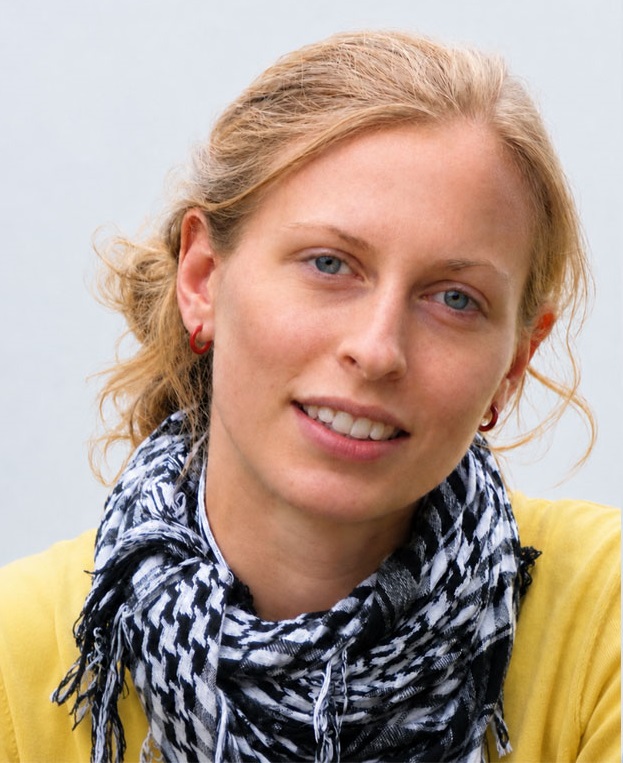
German journalist Eva-Maria Michelmann has given her first public testimony since her release and return to Germany, describing the conditions of her detention in Syria, which lasted nearly six months. She stated that she was subjected to prolonged solitary confinement, transferred among multiple detention centers, and witnessed what she described as harsh conditions inflicted upon female detainees. She also issued an appeal for the release of Turkish-Kurdish journalist Ahmet Polat (civil name: Mehmet Nizam Aslan) and all political detainees, asserting that Syria is “not safe,” according to her words.
During a press conference held in Germany following her release, Michelmann stated that she had been held since early 2026 in total isolation inside a windowless solitary cell and was denied any communication with the outside world. She added that during her detention, she was informed that no one would look for her and that the German authorities were not responding to inquiries regarding her case, which led her to believe that the outside world assumed she had passed away.
She further noted that it was only after her arrival in Germany that she learned her family and thousands of people had continuously demanded disclosure regarding her fate and worked toward her release. She expressed her gratitude to everyone who contributed to the human rights, media, and diplomatic efforts that culminated in her freedom.
In her testimony, Michelmann reported that she was transferred among several places of detention throughout her holding period, explaining that she was initially detained in what she described as the “Central Headquarters of Internal Security” in Aleppo city, before being transferred to another detention center within the city, where she stated that interrogations were conducted under torture. She added that she was later transferred to a women’s prison in Idlib Governorate, where she was able to communicate with other female detainees for the first time.
She mentioned that many of the women she met in the Idlib prison told her they had been detained and subjected to torture for years, including prior to the current authorities assuming power in December 2024, according to her testimony.
She also explained that she was subsequently transferred to Damascus, where she was held in three different detention centers. She stated that one of the cells held 15 women, mostly from the Alawite community, within a confined space suffering from humidity and mold, while she was held in another center referred to as “The Court” with more than twenty women in a mattress-free room. She added that she also spent time in a detention center that housed mothers with their children, including infants.
In her testimony, Michelmann accused the de facto authorities in Syria of practicing torture during interrogations, including beatings and electric shocks, and alleged the occurrence of killings and summary executions against civilians who attempted to flee.
The German journalist called upon the international community to sustain pressure for the release of all journalists and political detainees, emphasizing that her primary focus at present is on those who remain detained or forcibly disappeared, foremost among them journalist Ahmet Polat.
This testimony comes following Michelmann’s release and her return to Germany on June 19, 2026, after a detention lasting 152 days, while the Turkish-Kurdish journalist Ahmet Polat (Mehmet Nizam Aslan) remains detained since January 18–19, 2026, amid ongoing ambiguity regarding his place of detention and legal status.
In a statement issued on June 22, 2026, the Rights Monitor Syria platform welcomed Michelmann’s release, but emphasized that the human rights case has not concluded as long as Ahmet Polat’s detention continues. The platform demanded his immediate and unconditional release, the disclosure of his place of detention, the preservation of his right to access by his family, lawyers, independent physicians, and the International Committee of the Red Cross (ICRC), and the initiation of an independent investigation into allegations of torture and ill-treatment.
The platform further stressed that the continued incommunicado detention of journalists, the deprivation of their fundamental legal guarantees, and the concealment of their whereabouts raise serious concerns over violations that may amount to enforced disappearance and arbitrary detention. It underscored the critical need for independent investigations and the accountability of those responsible for any proven violations, in accordance with international human rights standards.