The Directorate of Sports and Youth in Hama Issues a Decision Banning “Belly Dancing” Classes Amid Fears of Escalating Restrictions on Public Freedoms in Syria
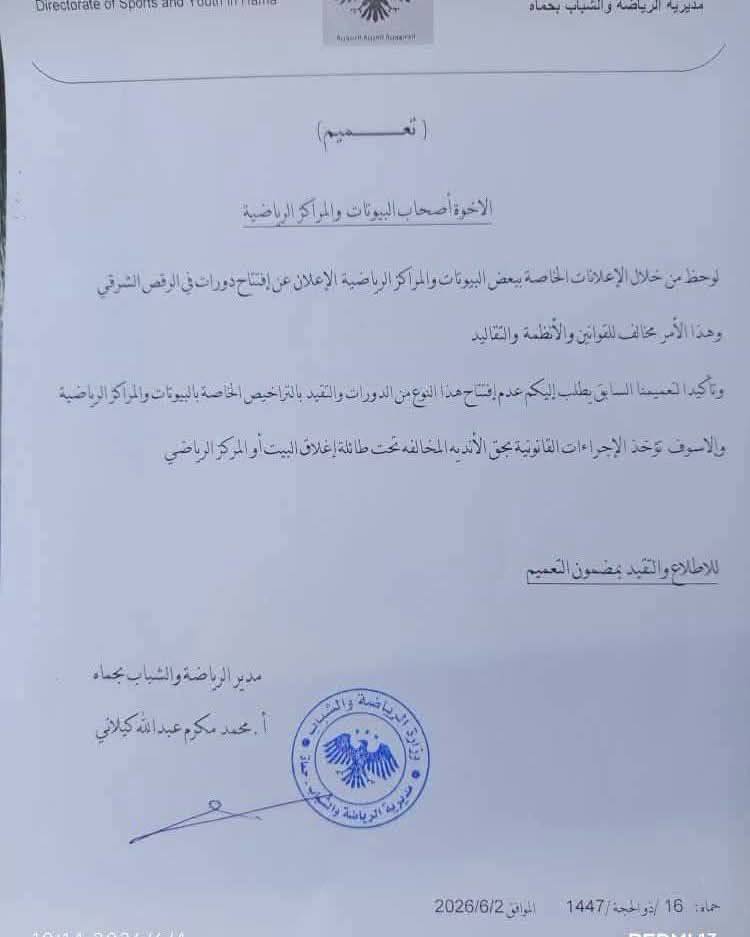
The Directorate of Sports and Youth in Hama Governorate has issued a circular addressed to owners of sports facilities and centers, prohibiting the launch of “belly dancing” instruction classes. The circular emphasizes the strict necessity of adhering to the specific type of license granted to these centers, warning that legal action will be taken against violators, which may escalate to the closure of the sports facility or center.
According to the circular, the Directorate deemed belly dancing classes a violation of laws, regulations, and traditions, asserting that the relevant authorities will take the necessary measures against any sports center or hall that organizes or hosts this type of class.
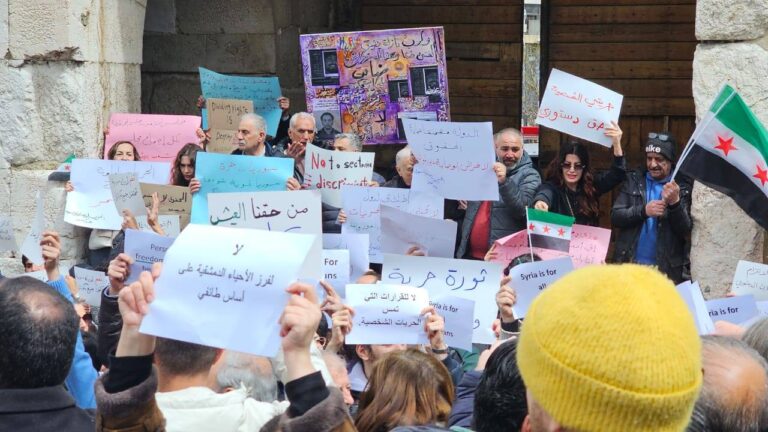
The decision has sparked widespread debate and criticism among activists and public affairs observers. Some viewed it as a restriction on an artistic and athletic activity practiced by many women for physical fitness and recreation. They regarded it as an interference with individual freedom to choose social and cultural activities practiced within legal frameworks.
In a human rights context, these measures raise concerns about the expanding scope of restrictions imposed on personal and public freedoms in areas under the administration of the current authorities. This is particularly notable amidst growing accusations of adopting conservative, religiously oriented policies that impact the public sphere and individual lifestyles.
Critics of the decision argue that banning this type of activity reflects a trend toward imposing social and religious restrictions on the public space, constituting a direct interference in individual choices and lifestyles. Conversely, the relevant authorities consider these measures as part of enforcing current laws and regulations, and preserving what they describe as societal values and traditions.
This decision comes in the context of similar measures witnessed in Syria recently. On March 15, 2026, the Damascus Governorate Council issued a decision banning the serving of alcoholic beverages in restaurants and nightclubs in the city of Damascus. That decision likewise triggered public debate and human rights concerns regarding the restriction of personal freedoms and interference in individual choices related to their lifestyles.
These developments indicate an escalating controversy over the extent of the Syrian authorities’ commitment to respecting fundamental rights and freedoms, including the freedom of individuals to engage in social and cultural activities and to choose their lifestyles within the boundaries guaranteed by law. Furthermore, they highlight growing fears of imposing restrictions on society based on religious or ideological considerations, amid repeated human rights calls to respect pluralism, safeguard civil rights, and ensure non-discrimination or containment of public freedoms.