Loss of Contact with a Young Woman in the Masyaf Countryside and Her Appearance in a Video Recording Spark Suspicions Amid an Escalation in Disappearances of Women and Girls in Syria
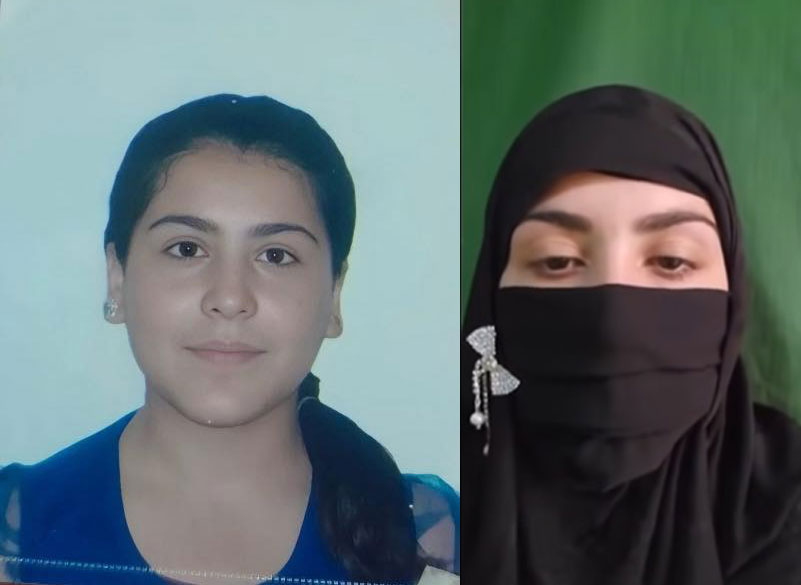
The loss of contact with Siham Muhammad Al-Khalouf, a 20-year-old woman belonging to the Alawite community, in the countryside of Masyaf city in the Hama governorate—and her subsequent appearance in a video recording under circumstances that have raised widespread questions—has renewed human rights concerns regarding the escalating incidents of disappearances of women and girls in Syria in recent months.
According to available information, contact was lost with Siham Muhammad Al-Khalouf on May 26, 2026, while she was in the village of Al-Qusayr (Qusayr Deir Huwayt), which administratively belongs to the Masyaf district in the western countryside of Hama. Local sources reported that she was heading out to purchase some household goods at approximately 1:30 PM and was speaking on the phone with one of her female relatives before the call was abruptly cut off. Her phone subsequently went out of service or was turned off.
The following day, her family filed an official report with the police after all attempts to communicate with her or obtain any information regarding her whereabouts failed, and after contacting relatives and acquaintances to no avail.
According to testimonies circulated by local residents, an unplated vehicle (without license plates) was spotted near the young woman shortly before her disappearance.
In a later development, Siham Al-Khalouf appeared on May 29, 2026, in a video recording wearing a niqab (face veil). During the video, she declared that she had not been abducted, claiming that she left her family home due to marital pressures. She also denied any involvement of security or official authorities in her disappearance.
However, her family rejected this narrative, asserting that the contents of the recording do not reflect the reality of what occurred, and pointing to serious suspicions surrounding the circumstances of her appearance. Local sources also noted that the young woman did not wear the hijab prior to her disappearance, and that her manner of speech in the recording appeared distinct from her usual dialect, compounding the controversy and anxiety surrounding the circumstances of the case.
This incident occurs within the context of an alarming escalation in disappearances and abductions targeting women and girls in Syria.
In a previous, widely publicized incident, Maryam Fayez Sultan, a minor born in 2010 who originates from the Alawite community, returned to her family home on May 23, 2026, approximately 134 days after her disappearance in the city of Damascus. Maryam had gone missing on January 9, 2026, while returning from a private tutoring lesson in the Mazzeh 86 neighborhood, before returning to the city of Jableh in the Latakia governorate under circumstances whose details remain unclear.
Similarly, the fate of Mrs. Farah Issa Khamis remains unknown since contact was lost with her on the evening of May 20, 2026, after she left her home in the village of Ain Al-Fawwar in the western countryside of Homs. Meanwhile, ambiguity continues to surround the case of Mrs. Duha Rizk Assad (36 years old), with whom communication was severed on May 17, 2026, after she left her home in the Al-Sabil neighborhood of Homs.
In a related context, on May 14, 2026, the minor Zeinab Ali Al-Saddam (15 years old), who hails from the Shiite community, was released after being found in a deteriorated health condition following her abduction, which lasted for 45 days in the western countryside of Homs.
Furthermore, Batoul Suleiman Alloush, a student at the Medical Technical Institute at Tishreen University who belongs to the Alawite community, remains missing since April 29, 2026, following her disappearance while returning from university in the Latakia governorate, according to statements from her family, who continue to demand the disclosure of her fate.
These recurring incidents raise serious concerns regarding the safety and security of women and girls in Syria, particularly given the ongoing documentation of disappearances and abductions across various regions of the country, amid a lack of clear information regarding the fate of many missing individuals.
International human rights standards affirm that the rights to liberty, security of person, and protection from enforced disappearance and unlawful detention are fundamental rights guaranteed to all individuals. Consequently, there is an urgent need to conduct independent and transparent investigations into all reported cases of disappearance and abduction, to disclose the fate of the missing and ensure their safety, and to hold those responsible for any potential violations accountable, in line with the principles of justice, the rule of law, and the prevention of impunity.